Pineville, NC, United States
About this listing
Soyuz 013 FET Matched Pair: Print Stereo the Way You Actually Hear It
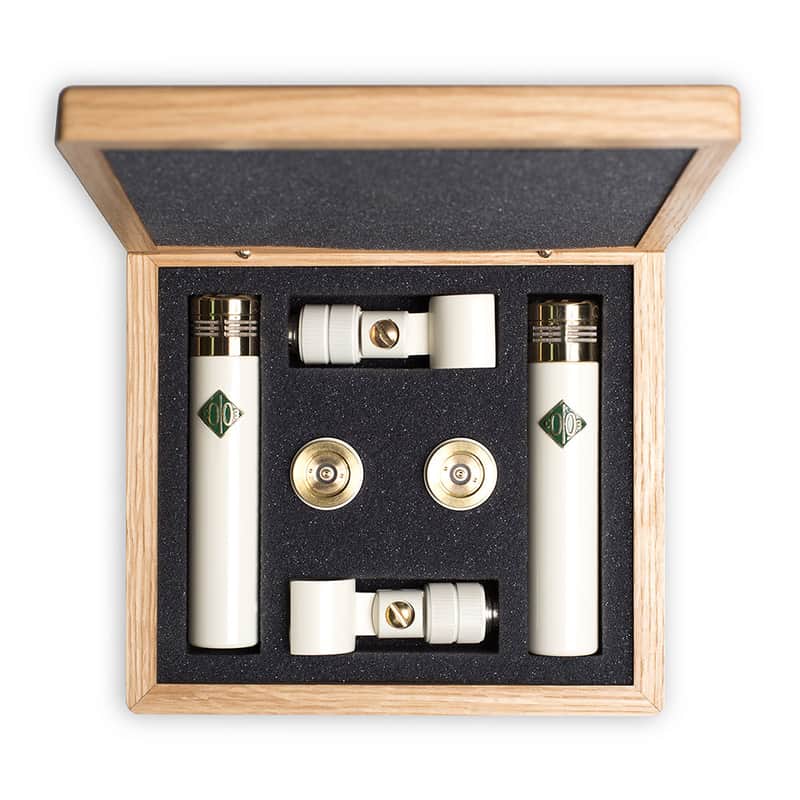
The Soyuz 013 FET Matched Pair is a factory-matched stereo pair of small-diaphragm FET condenser microphones, each built around a 25 mm gold-sputtered cardioid capsule and an in-house-wound output transformer, and each handling up to 143 dB SPL. Soyuz measures and selects the two mics so their output level and tonal response track together within a tight tolerance, then boxes them as a set that behaves as one instrument. Unlike most pencil condensers, the 013 FET is fast and detailed yet musical and full, trading none of its warmth for speed. When a recording depends on a believable stereo image, a kit that spreads naturally or an acoustic that sounds like the room, this is the pair you reach for every time two mics have to agree.
What 'Factory-Matched' Actually Means — and Why It Decides Your Stereo Image
Two microphones are never truly identical off the line; tiny differences in sensitivity and frequency response are normal. In a factory-matched pair, Soyuz measures and selects two 013 FET mics whose output level and tonal response track together within a tight tolerance, then boxes them as a set. This matters because stereo imaging is built on agreement: if the left mic is a hair louder or brighter than the right, the center of your image drifts, the phantom center smears, and a mono fold-down can go hollow or thin. A matched pair keeps level and tone aligned across both channels, so panned overheads and stereo instrument tracks land tight, centered, and mono-compatible without corrective gain-riding or EQ. You place them, you print, and the image is already right.
The Small-Diaphragm Capsule: Speed You Can Hear
Each 013 FET carries a gold-sputtered small-diaphragm capsule, hand-machined in-house, measuring 1.0 in (25 mm) across. A small, light diaphragm can start and stop faster than a large one, which is exactly why small-diaphragm condensers are the classic choice for transient-rich sources: the snap of a snare, the pick attack on an acoustic, the leading edge of a cymbal. That speed is what audio people mean by transient response — how faithfully the mic tracks a sound's sudden onset instead of rounding it off. The 013 FET is voiced with a gentle high-frequency roll-off rather than the hyped, spiky top of typical pencil mics, so you get all the detail and articulation without the glassy edge that makes bright sources tiring.
The In-House Transformer: Warmth a Pencil Mic Isn't Supposed to Have
Behind the capsule sits an in-house toroidal output transformer — the part that gives the 013 FET a body most small-diaphragm mics simply lack. A transformer adds gentle harmonic content and a low-end weight as the signal passes through it, filling in the warmth and dimension that transformerless pencil mics leave flat. The result is a mic that captures fast, detailed transients and still sounds warm and three-dimensional underneath them: clear and thick at the same time. With 16 dB(A) of self-noise and a 143 dB maximum SPL (extendable with the included screw-in -10 dB pads), it stays quiet on delicate sources and unflappable on loud ones.
On Drum Overheads: The Signature Application
Overheads are where the matched pair earns its place first. The 013 FET prints the crack of a snare and the attack of the cymbals with real speed, while the transformer keeps the toms ringing full and the whole kit sounding warm rather than brittle. Because the pair is matched, a spaced or coincident overhead setup images tight and stays mono-compatible when the mix folds down — no wandering center, no phase-thin cymbals. Set them as your overheads and the kit arrives with depth and cohesion already baked in, needing far less overhead EQ to sit in the track.
On Acoustic Guitar, Piano, Brass, and Room
The same fast, warm character makes the pair a workhorse across the session. On acoustic guitar it captures string definition and body without the spiky top or artificial boom that plague hyped pencil mics. On piano and upright it delivers a rich, even image from lows to highs. On brass and woodwinds it keeps the air and breath while taming blare, and as a room or ensemble pair it prints depth and space instead of just a dry source. With two matched mics you can commit to real stereo capture on any of these and trust that both channels are telling the same story.
The Stereo Techniques the Pair Was Built For
A matched pair unlocks the classic stereo methods that a single mic can't touch. Set them as a spaced pair for a wide, roomy image; as an X/Y coincident pair for a tight, phase-safe center; or angle them as a near-coincident pair for a blend of width and focus. Each technique leans on the two capsules responding identically to the same sound arriving at slightly different times or angles — precisely what the factory match guarantees. The stock cardioid capsules cover the vast majority of these setups, and because the 013 uses an interchangeable capsule system, the pair can grow into optional omnidirectional or hypercardioid heads for room and orchestral work down the road.
Who the 013 FET Matched Pair Is For
This is for the engineer who has been fighting thin, brittle overheads and wants a pair that images tight and sounds warm the moment it's up. It is for the home or project studio stepping up from mismatched single mics to a real, boutique-grade stereo tool that captures drums, acoustic, piano, and room with the same voice. And it is for the buyer comparing pencil condensers on spec who wants the whole story: a hand-machined 25 mm capsule, an in-house transformer, 143 dB max SPL, 16 dB(A) self-noise, and a genuine factory match — all handmade in Tula, Russia, and built to stay in the locker for years.
Price$1,599
Free 2-Day Shipping
Only 1 left
Grab it before it's gone
30-Day Return Policy
Enjoy peace of mind with your new gear