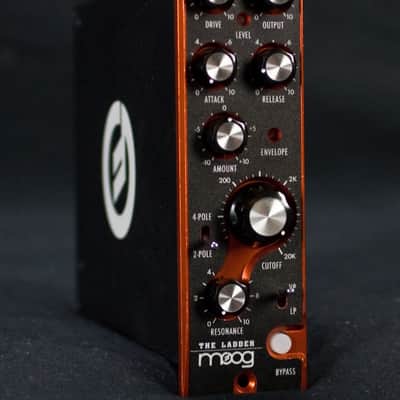
Moog The Ladder 500 Series Filter Module
Compare 0 Listings
Product details
Gallery
Product Specs
| Brand | |
|---|---|
| Model |
|
| Finish |
|
| Year |
|
| Made In |
|
| Categories |
Overview
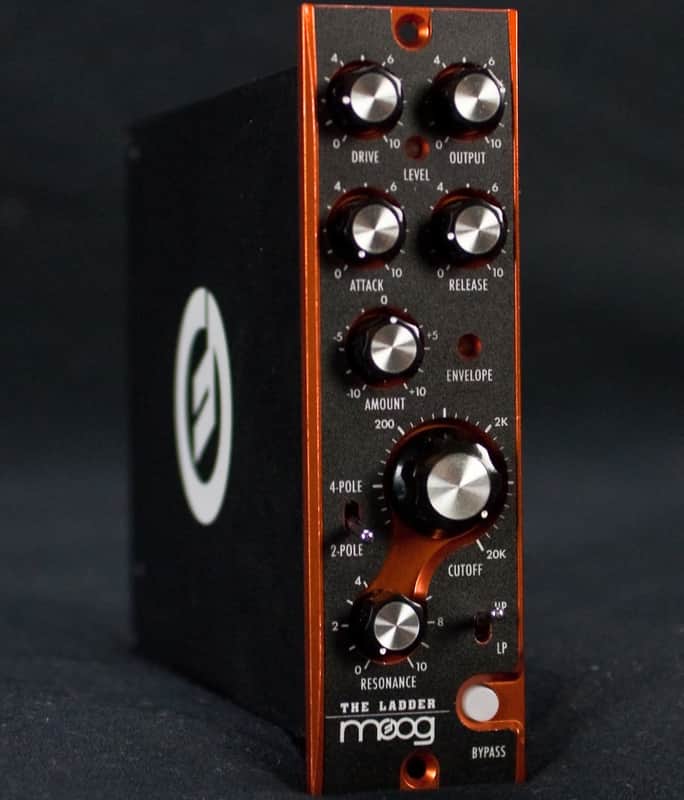
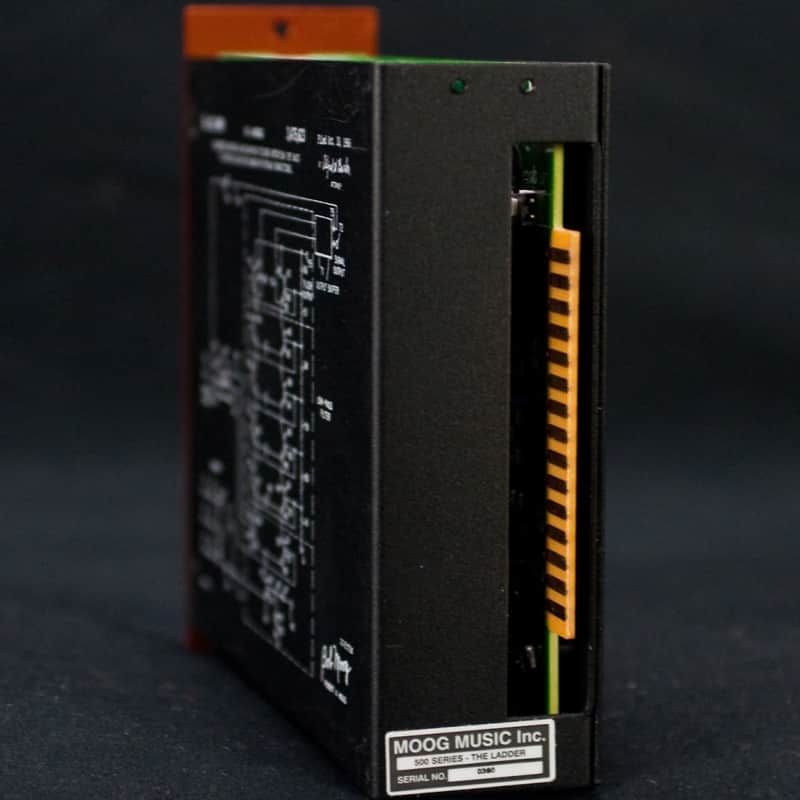
Moog's "The Ladder" module is a 500 Series version of the filter that set the standard decades ago. Based on Bob Moog's original Dynamic Transistor Ladder Filter design from his classic synths, this module provides a style and level of sonic manipulation you simply will not find in other 500 Series gear. The Ladder's got high- and low-pass filters that are smooth as silk and let you chop what you don't need out of your track, but the envelope section is where it really comes together. Create compression-type effects either subtly or completely over the top, and crank up the resonance to warp the sound into something else entirely -- even push the module into self-oscillation if that's what's called for.
Reverb Price Guide
Estimated Value for Moog The Ladder 500 Series Filter Module on Reverb
Includes material, year, finish
*Excludes Brand New, B Stock, Fair, Poor, and Non-functioning. Prices exclude shipping and tax/VAT/GST.