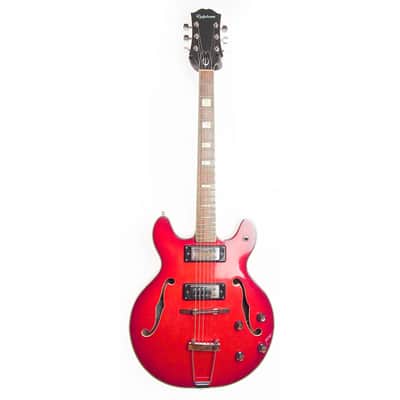
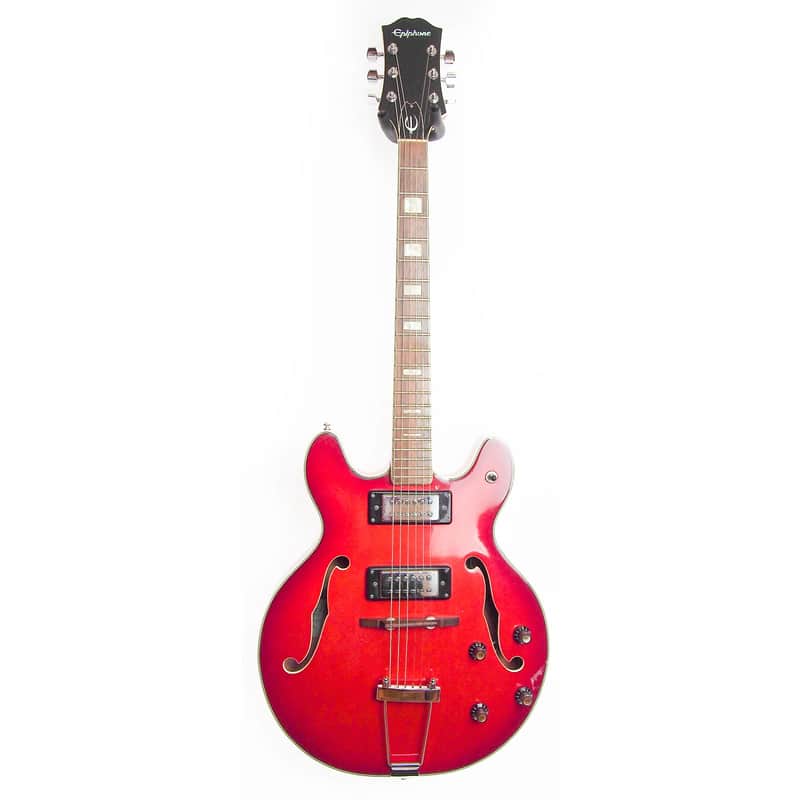
Epiphone EA-250 1972 - 1974
Compare 0 Listings
Product details
Gallery
Product Specs
| Brand | |||||
|---|---|---|---|---|---|
| Model |
| ||||
| Finish |
| ||||
| Year |
| ||||
| Made In |
| ||||
| Categories | |||||
| Body Shape |
| ||||
| Body Type |
| ||||
| Bridge/Tailpiece Type |
| ||||
| Color Family |
| ||||
| Fretboard Material |
| ||||
| Model Family | |||||
| Neck Construction |
| ||||
| Neck Material |
| ||||
| Number of Frets |
| ||||
| Number of Strings |
| ||||
| Offset Body |
| ||||
| Pickup Configuration |
| ||||
| Right / Left Handed |
| ||||
| Scale Length |
| ||||
Overview
In 1970 all production of the Epiphone brand moved to Japan, with redesignated model names starting with EA (thinline), ET (electric solidbody) or ES (electric Spanish).
The EA-250 was the predecessor of the later EA-255, which had a similar semi-hollow dual humbucker design, but with a walnut finish and gold hardware.
The EA-250 was the predecessor of the later EA-255, which had a similar semi-hollow dual humbucker design, but with a walnut finish and gold hardware.
Reverb Price Guide
Estimated Value for Epiphone EA-250 1972 - 1974 on Reverb
Includes material, year, finish
*Excludes Brand New, B Stock, Fair, Poor, and Non-functioning. Prices exclude shipping and tax/VAT/GST.