Dynacord ADD ONE & ADD DRIVE Vintage 12-Bit Drum Sampler & Drum Synthesizer w/ MIDI IN/THRU/OUT & Trigger Input
This gear has sold
See similar gear from other Reverb sellers

Our users rate Reverb
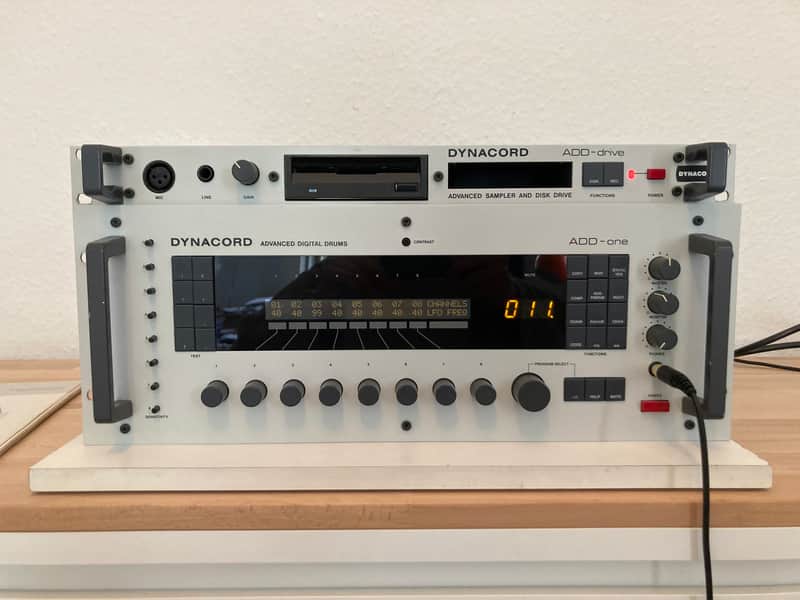
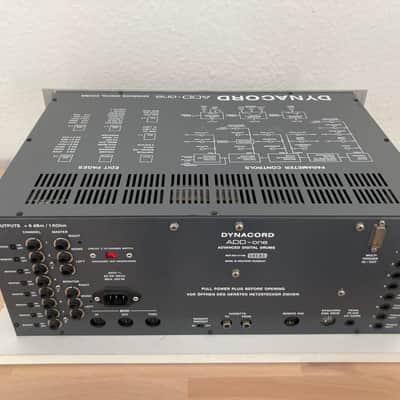
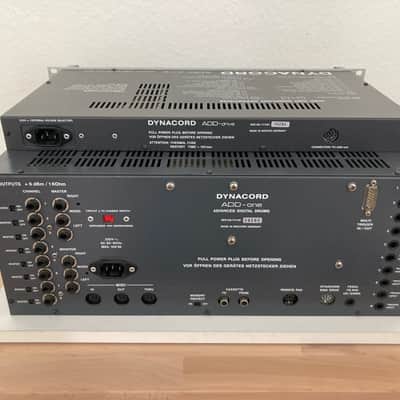
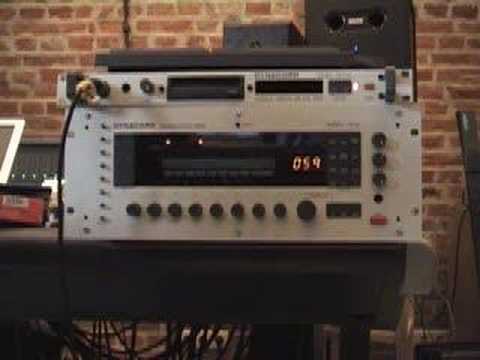
Dynacord ADD ONE & ADD DRIVE 12 Bit Drum Sampler & Synthesizer from 1986
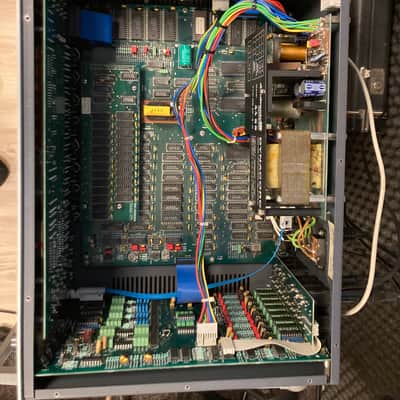
Full functional & pro serviced in 2023, smoke and pet free studio.
Including
- a bunch of sample packed 3.5″ Floppy Disks
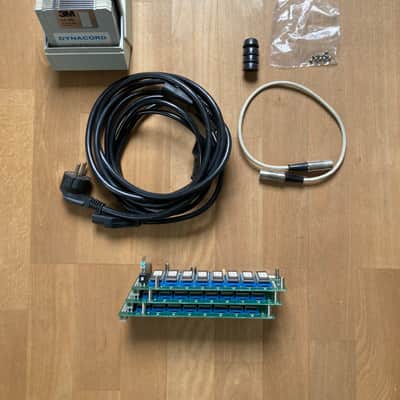
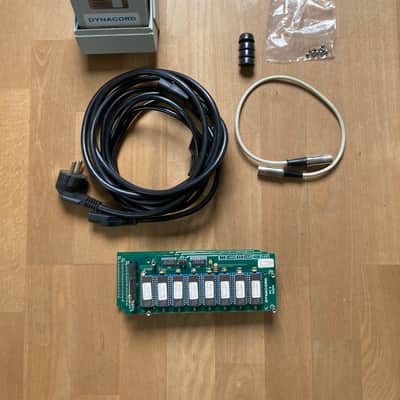
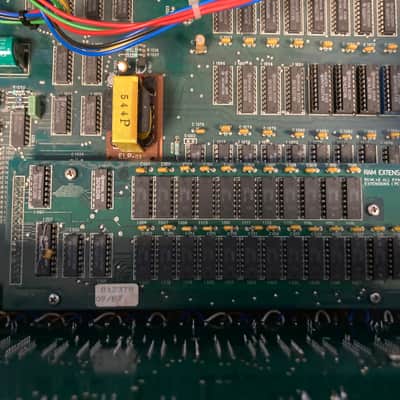
- three original sample ROM boards (for using the ADD ONE as stand alone gear; wich was obsolete by acquiring the ADD Drive with a delivered RAM Board - now installed in the ADD ONE)
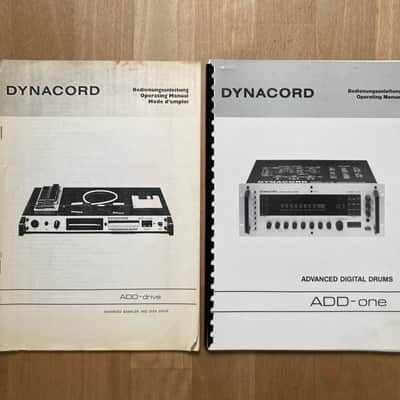
- original manuals for ADD ONE & ADD DRIVE (operating & service manuals are also available free and online in english language)
- 2 power cables; 1 connection cable
- 4 rubber feet for main unit (never used since i always used the rack)
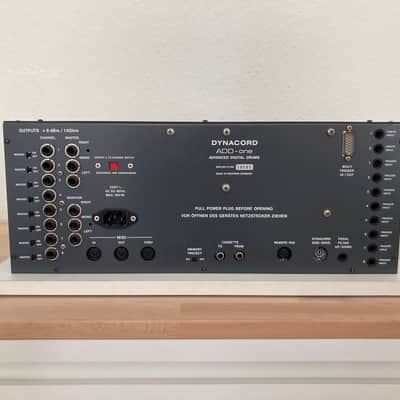
Unit has MIDI IN/THRU/OUT.
As it got 8 single trigger Inputs you can trigger the ADD One with CV.
Pro service:
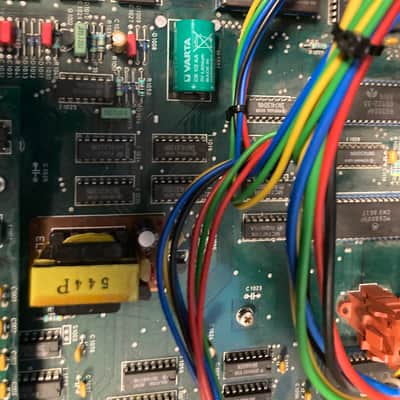
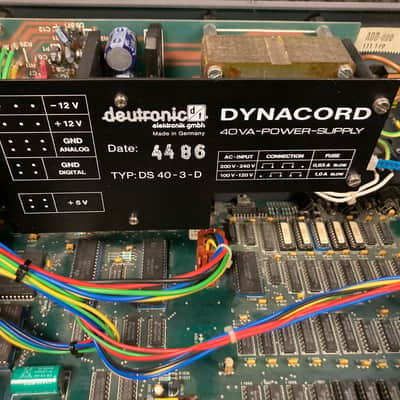
New Battery, recapped PSU, new backlight strip. (these are the weak spots of an older ADD ONE unit). Always ask seller for these parts.
Voltage:
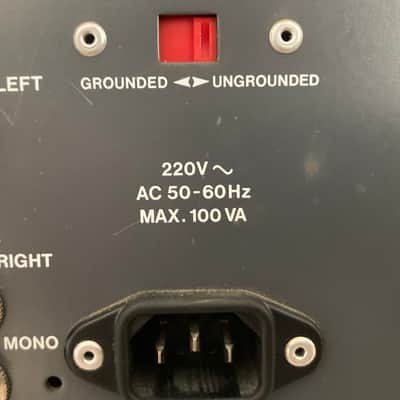
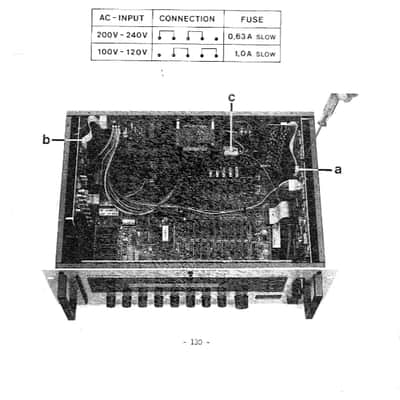
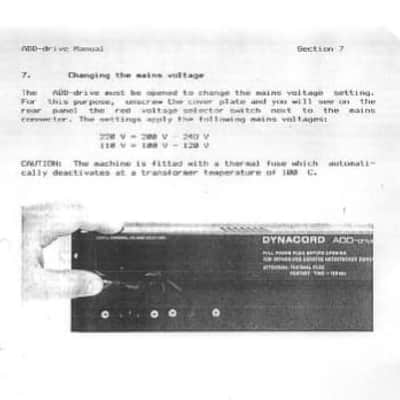
You can easily change the mains voltage settings from 230 V to 120 V as seen on the user manual's screenshot
Technical specifications:
Polyphony 8 Voice, 8 Dacs
Timbrality 8 Part
Oscillator 1 Oscillator/Sample per voice
LFO LFOs triangle saw square sample and hold
Synthesis type Samples
Filter 8x Low pass resonant (self-resonating) Analog CEM 3389 filter per voice
Storage memory 1Mbytes upgradable to 8Mbytes
Input/output : MIDI, CV, Pads
-----------------------------------------
Secure, insured, double boxed shipping with tracking.
Personal pickup also welcome.
Open to reasonable offers :-)
------------------------------------------
THE UNITS
The Dynacord ADD-one and its small sample unit ADD-drive are certainly among the few vintage devices that are still a real insider tip today. Together, both take up 5 height units in the rack in order to finally be able to fire off eight (8!!!) samples. The complete package of both devices cost DM 9,300 in 1987. A steep price that only professionals could afford at the time. But what is the appeal of this rack monster? The answer lies hidden inside the device and, as is so often the case, reads: The complete analogue and extensive synthesis with which the samples - more than in all comparable drum samplers of that time - can be bent beyond recognition.
HISTORY OF THE DYNACORD ADD ONE
The ADD-one was created between June 1985 and February 1986 as a result of a collaboration between the Bavarian company Dynacord and the American design team Fast Forward Design. The designer forge in Los Angeles was founded by Marcus Ryle, Michael Doidic (both previously at Oberheim and now at Line6) and Carol Nakahara. Products like Alesis ADAT and Quadrasynth, Digidesign Sample Cell, Dynacord ADS and ADS-K and many more come from this. Ryle is best known for his work for Oberheim. The Matrix-12 and Xpander come from him, for example. Legends like Jean-Michel Jarre also use the ADD-one.
In 1987 the ADD-drive followed, which was delivered with a RAM board. The ADD-one thus has an external analogue/digital input in jack or XLR and a 3.5″ floppy disk drive for external sample storage. Without this RAM board, the ADD-one can be upgraded with up to three sample ROM boards.
From today's perspective, the ADD One together with the ADD Drive is certainly more recommendable than an ADD One with additional boards. If you get a library with the drive, you can count yourself lucky, because the drum community was already well organized at the time and maintained a lively exchange of sounds. Important: Retrofitting an ADD One with an ADD Drive is not easily possible, this always requires the internal memory modules for the ADD One.
THE DRUM EXPANDER VIEWED FROM THE OUTSIDE
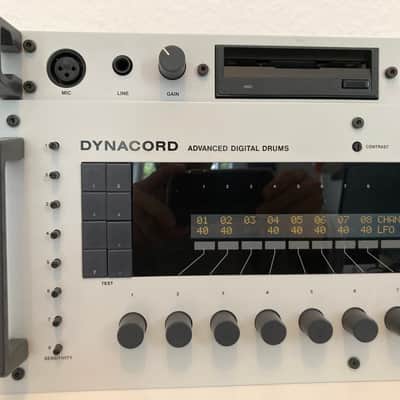
What is striking about the ADD-one are the eight rotary potentiometers under the 80-character LC display. It is reasonable to assume that these are analog input tools. And you guessed it: All editable parameters of a sample can be edited clearly on four menu pages.
Optionally, one and the same parameter can be displayed for all eight channels (e.g. to adjust the volumes or panoramas of all drum sounds), or you can only edit one of the eight channels, but then have e.g. all filter or LFO parameters on one display page at the same time Access. Live editing is possible at any time, as long as you don't overload the internal processor. Here and there, however, the filters bend and make the resonance whistle, but this was not a problem in the test.
There are eight trigger buttons to the left of the display, which are particularly useful when editing. In this way, all sounds can be heard at maximum volume. Thanks to these 8 small buttons, editing on the device is almost child's play. Once you get used to the menu terms, you can get to all parameters quite quickly. Next to it are the trigger sensitivity controls. These determine the threshold for triggering a sound in the ADD-one. The eight trigger inputs on the back of the ADD-one make it the perfect 80s syn drum machine. The buttons for all menu functions are located on the right side of the display. Here you can step through the edit pages.
THE BUTTONS FOR THE MAIN MENU
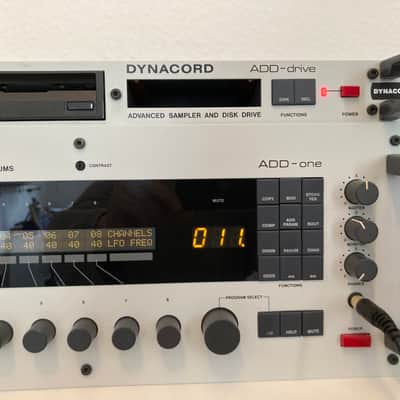
Of course, this includes the main edit pages, such as sample selection and the three edit levels of the sounds. There are also buttons for save, copy, MIDI settings and actions that are less important today, such as "Chain" (important for live, similar to Program Change today). The largest potentiometer is intended for program selection. The ADD-one even provides a help function – conceptually ahead of its time. If you don't know what to do, press the HELP button and the function you have just selected will be explained to you in plain text. Practical.
REAR OF THE ADD ONE
Viewed from behind, the ADD-one is also impressive: In addition to the eight trigger inputs already mentioned, there are two monophonic or polyphonic stereo outputs (live drum monitoring is no problem) and eight individual outputs. The latter can be added to the sum using a toggle switch or used as direct outs. Of course, there is a trio of MIDI sockets on the back, although after many attempts I assume that the ADD-one does not understand any SysEx messages. Furthermore, there are connection options for the ADD-drive and the trigger inputs for external pads on the back. There is also a connection for a cassette interface, but you can safely do without it if you have the ADD drive.
THE INNER VALUES OF THE ADD ONE
The ADD-one uses samples as raw material for its sounds. The permanently installed samples include not only bass drums, snares, congas, hihats, etc., but also waveforms such as sine, triangle, pulse, various types of noise and more. This means that you can create your own sounds.
The samples have a resolution of 12 bits and a sample rate of either 25 or 50 kHz. My preferred setting is 25 kHz because that's when the ADD-one sounds really full. That's where you hear the real difference to a tool like Native Instruments Battery, whose concept seems to have been borrowed from the ADD-one in many respects. Even if the ADD-one can also be used stand-alone with the factory sounds, the full power of this powerhouse is only achieved with the optional ADD-drive.
ADD DRIVE
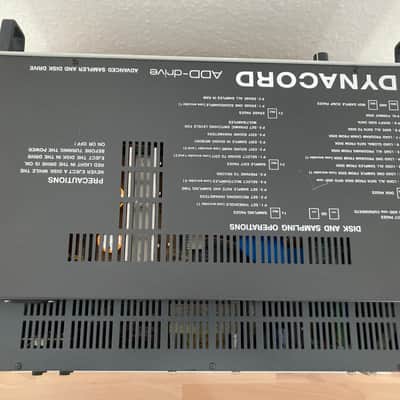
The ADD-drive is much more than just a 19″ floppy disk drive. It's like an analog-to-digital converter with integrated sampling post-processing. The main unit ADD-one immediately recognizes the connected drive and from then on also becomes the input center for the AD-drive. So don't be surprised if you hardly find any input buttons on the ADD-drive, the sample parameters are also operated via the ADD-one.
The devices are connected to each other with a (unfortunately not commercially available) cable. After switching on, the ADD-one automatically recognizes the ADD-drive and provides additional menus. On the ADD-drive, you can now use the DISK button on the ADD-one to call up the disk functions (save, load, etc. - entire banks or individual sounds) or use the REC button to call up the sampling functions. For this purpose, there is a microphone (XLR) and a line input on the front side next to a potentiometer for leveling the input signal. With the help of the ADD-drive, sample settings such as start and end points, loop start and end points and naming are now possible - also on the existing factory sounds, by the way.
You can even create multi-samples in addition to one-shot samples for drumming! The ADD-one does not have a normalize function, but it does have a gate and compressor that can be looped in during sampling. You don't hear anything that brutal anymore! Thanks to this feature, ADD-one drum sounds are never too quiet ;-)
The exact level control when sampling through the bar graph on the display is also great. This makes setting the threshold ingeniously easy - child's play! Parameters related to pitching can be edited at the sample level: frequency, pitch bending modulated via envelope, LFO or external controller. This is followed by the digital-to-analog converter.
If the data from the sampling unit is already a guarantee for a great sound, as with the EMU SP-12 or the Studio 440 from Sequential, the purely analog part of the ADD-one finally shoots the bird - and also provides the just mentioned Cult machines loose in the shadows.
Each of the eight voices runs through the voltage-controlled, purely analog modules: filter (with resonance!!!), amplifier and panner (see Fig. Parameter Controls). The filter appears to be a 24dB filter that resonates to self-oscillation. The filter is modulated by the first envelope, as is the resonance parameter, but the latter is independent of the filter. The filter can also be modulated by the second envelope, the resonance and the LFO.
This is followed by the amplifier, which can be modulated by the second external controller. The samples are variable in volume via the attack strength of the MIDI keyboard. The "Duration" parameter is a special feature. This allows samples to be played back in a shortened form without having to be cut. This parameter is modulated by external dynamic triggers. Last but not least is the voltage controlled panner, which can add some stereo impact to the monophonic samples.
In addition to the panorama position, the sample can be modulated via the second envelope or the LFO. The envelope curves show some peculiarities: The first envelope curve is always controlled by the velocity and can only be changed using the Decay parameter. In contrast, the second envelope has a classic structure and is not dependent on velocity. When using the envelopes you have to be clear in advance about your own editing intentions. The LFO does not have any special features: A right-hand oscillation or a random oscillation is used as the oscillation form, the speed can be set in the usual ways.
This item is sold As-Described
This item is sold As-Described and cannot be returned unless it arrives in a condition different from how it was described or photographed. Items must be returned in original, as-shipped condition with all original packaging.Learn More.
| Listed | 3 years ago |
|---|---|
| Condition | Mint (Used) Mint items are in essentially new original condition but have been opened or played.Learn more |
| Brand | |
| Model |
|
| Finish |
|
| Categories | |
| Year |
|
| Made In |
|
Product safety information may be available here.