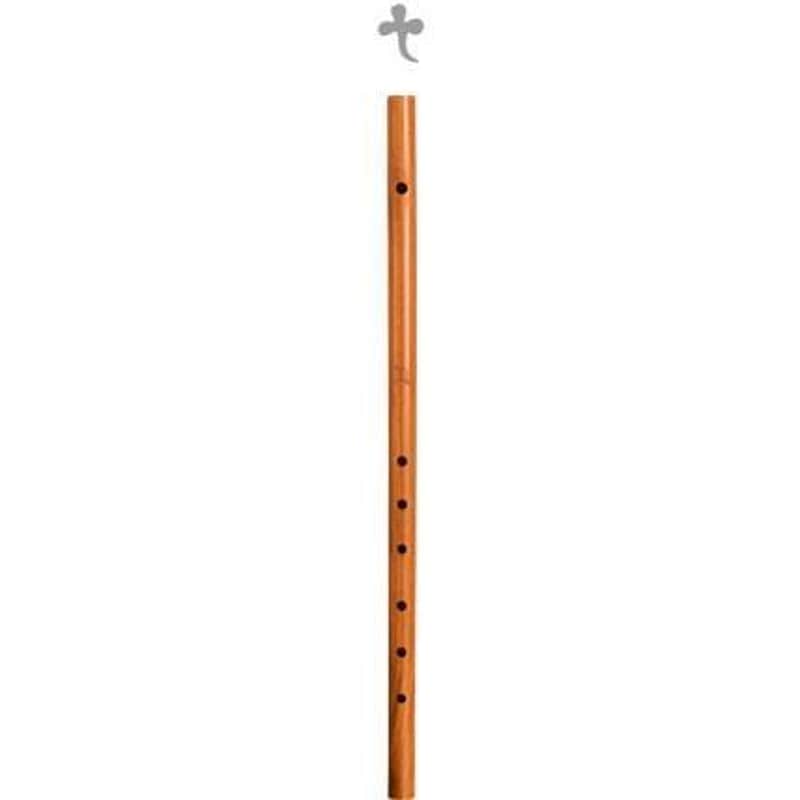
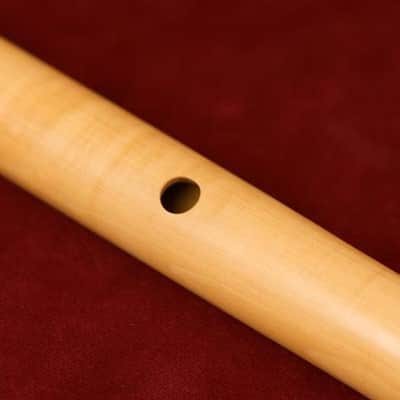
Renaissance Soprano Transverse Flute by Martin Wenner - Plum / A / a=440
This gear has sold
See similar gear from other Reverb sellers

Our users rate Reverb
The cylindrically-bored Renaissance flute was employed both as an ensemble and a soloist instrument between the beginning of the 16th century and about 1680. The most common size was the tenor flute in D, with which experienced players could easily play a tonal range of three octaves. The original instruments tend not to be stamped and can be found particularly in collections in northern Italian museums such as the Bibliotheka della Accademia Filarmonica in Verona. The instrument and its playing characteristics are described by Martin Agricola 1529 and 1545, Jambe de Fer 1556, Marin Mersenne 1636 and others.
The Wenner Renaissance flutes are based on preserved originals, observing historical construction principles. The soprano is available in plumwood, maple or boxwood. These flutes are available in G or A and can be constructed in the pitches of a=440 Hz, a=415 Hz, or a=408 Hz (original pitch).
These flutes are single-piece constructions. , they can be made as a two-piece construction, allowing for easier transport.
*Only plumwood pictured
| Condition | Brand New (New) Brand New items are sold by an authorized dealer or original builder and include all original packaging.Learn more |
|---|---|
| Brand |
|
| Model |
|
| Finish |
|
Product safety information may be available here.