Most guitar manufacturers follow a set formula. Whether electric or acoustic, the “industry standards” have been built the same way, over and over again for decades. On the other hand, there are now more independent builders than ever before, all creating new and exciting instruments that came to them in a dream or are scribbled down on napkins during rare lightbulb moments. Sure, they may build upon what’s already known, but the designs have evolved and these builders are not afraid to experiment. These builders often have more orders than they can possibly fill in a lifetime, with prices that are, unfortunately, usually unattainable for the working musician.
Enter Michael Kelly. This is a company that has been following the innovative works of boutique builders for years all while sourcing the right materials, using the right equipment, and scouting the perfect people. This long-term approach to guitar building makes their recent set of products the most interesting, inventive and attainable thing to ever come out of the boutique world.
Here's a look at some of Michael Kelly's current guitar offerings that truly put, to borrow their phrase, "boutique within reach." These are the kinds of guitars you’ve been looking for: all instruments offer a forward-thinking design ethos but with price points that are comfortably within the reach of most players.
Welcome the Triad 10E, a New Kind of 10-String
The Triad 10E is a 10-string guitar with dual sound ports. Sound ports are openings on the side of the guitar
that project sound up to the player. This feature increases volume and is a rare find for guitarists. The practice of sound
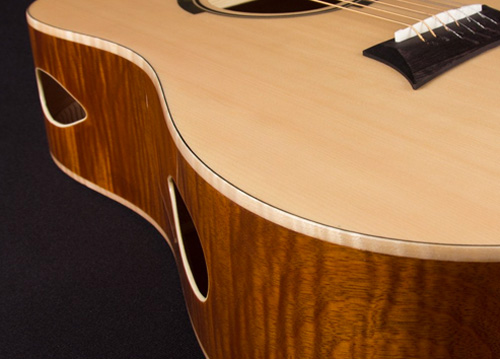 porting has never been utilized by the big three acoustic manufacturers and has, until now, only been done by
high-end boutique builders.
porting has never been utilized by the big three acoustic manufacturers and has, until now, only been done by
high-end boutique builders.
Concerning the ten strings, the setup mimics a 12-string in that the D, G, B and E strings are duplicated. Just like a 12-string, the B and E strings are tuned to the same pitch as their duplicates, and the D and G strings are tuned an octave apart of their respective partners. This leaves the bass notes to stand alone and produces an angel hair effect for the 4 higher strings. It successfully eliminates the awkward flub of the bass strings and their octaves, and keeps the best parts of a 12-string: those shimmering mids and trebles.
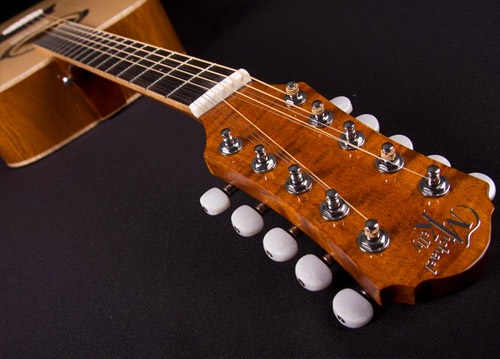
The top of the 10E is solid Spruce, with the back in a 3-piece configuration built from flamed Okoume and Ovangkol. Fishman electronics built into the body complete this peerless package. This guitar is not just a culmination of those decades observing the boutique builders; it took some real imagination to design and create.
The Triad Entwined E is a traditional dreadnought guitar emulating the features of a 10E, but with a twist: a gorgeous fretboard inlay made with real pearl and abalone. The other specs include those awesome dual soundports and the same wood selection of the 10E. Currently, the Triad Entwined E comes in at just $369. Honestly, where else are you going to find this level of quality, ingenuity, and sound at such an incredible price point? We’re thinking nowhere.
The 1950s and 1960s Series: Timeless Form, Modern Finish
On the electric side of the equation, Michael Kelly has recently updated a series of Strat and Tele-style guitars that contend directly with the Tom Anderson-type segment of boutique electrics, orienting towards vintage sound and feel. The 1950s series builds on the classic Tele body style, while the 1960s evolves guitars with a Strat-inspired shape.
The 1950s Series
The 1950s lineup includes five main designs with a few special editions thrown in. Each carries a '50s neck profile with a 1 11/16” nut width and 25.5” scale length. The 1952 boasts a flamed Maple top and twin PAF-Plus humbuckers, which can be individually coil-taped to attain a single coil sound with ease. For those who prefer the single coil sound, the 1953 might be more up your alley with its T-style single coil at the neck and stacked single coil at the bridge. The ‘53 also sports an Alder body and flamed Maple top so you can rock out in style.
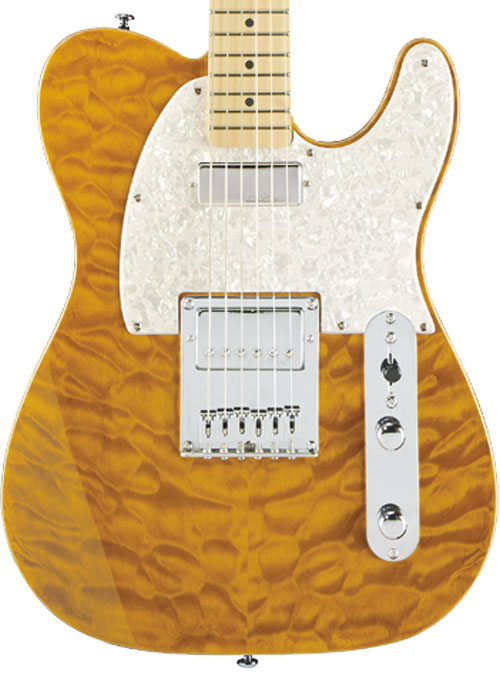
The 1954 ventures into less traditional territory with a quilt Maple top and Alder body, compound radius neck, and T-Style single coil at the neck with a Rockfield humbucker at the bridge. In contrast, the 1955 sports a mini humbucker up at the neck position and a Rockfield SWC humbucker at the bridge. The 1957 rocks a similar setup with its quilted Maple top and Swamp Ash body, but the electronics feature a Rockfield SVW humbucker at the neck and a Seymour Duncan Little ’59 single coil at the bridge.
For those who want something with a bit of a modern edge, the firm produces a line of 7 and 8-string entries of the 1950s series in the form of the CC53 7-String and CC53 8-String.
The 1960s Series
The 1960s guitars break down similarly to the 1950s models with accoutrements varying model-to-model. The 1963 features an Alder body with a flame Maple top, MK Fat single coils for the two neck pickups, and an MK Vintage Plus humbucker at the bridge. The 1964 uses an Alder body with a quilted Maple top, stacked single coils complete with coil-tap option on the neck, and a Rockfield Fat Ass humbucker with coil tap on the bridge position. The 1965 and 1967 both use a Swamp Ash body with quilted Maple top but have unique pickup configurations: the ‘65 features Rockfield Fat Stacked Single coils on the neck positions and a Rockfield SWC humbucker at the bridge, while the ‘67 swaps a USA Seymour Duncan Custom TB-5 at the bridge.
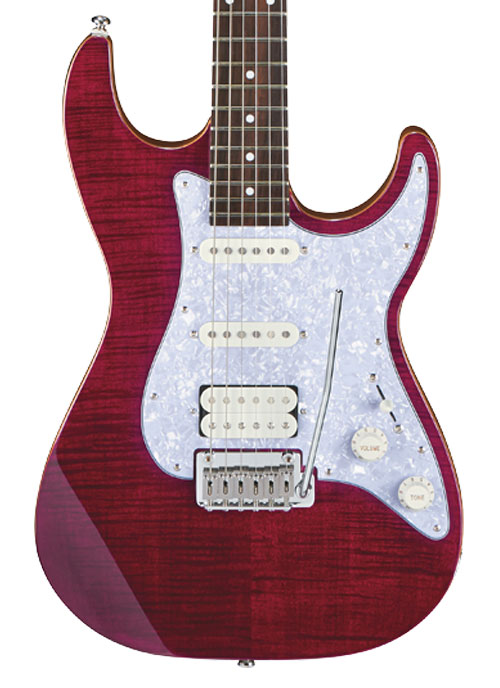
1963
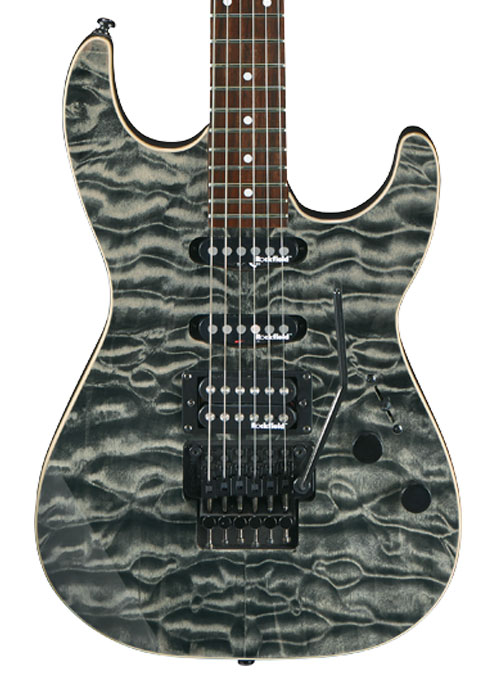
1964
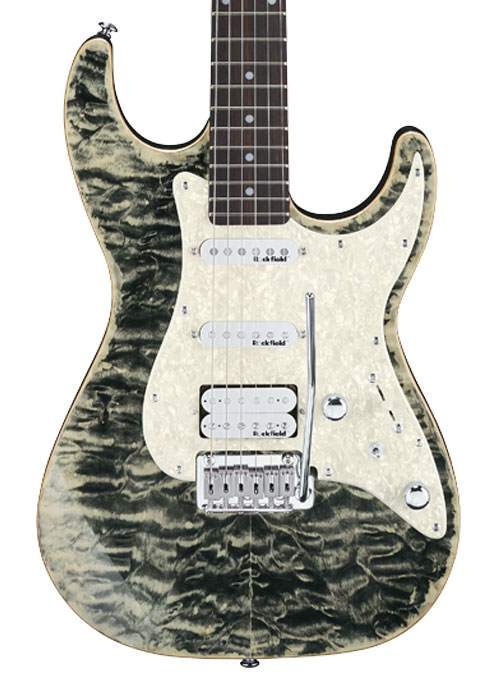
1965
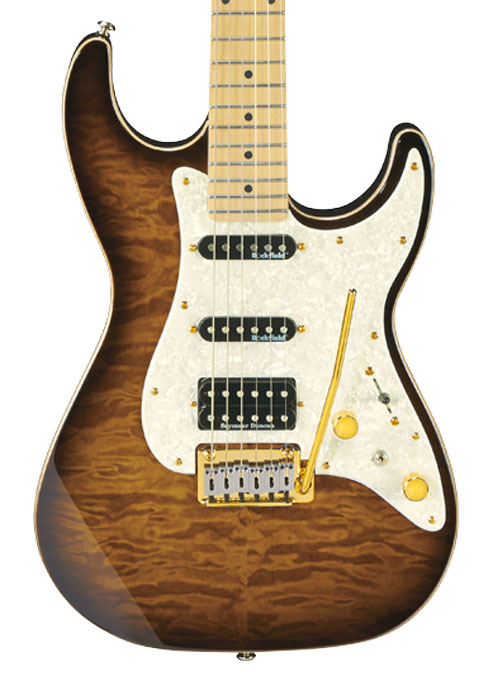
1967
The Rick Turner Models, for the Rock Star in You
If you've ever seen
Lindsay Buckingham perform in the past 40 years, chances are you've seen a Rick Turner guitar. Turner's
own builds typically sell in the $6,000 to $8,000 range, but through a partnership with Michael Kelly, his
 one-of-a-kind designs are finally available to those of us with pockets that may not be as deep as Lindsay
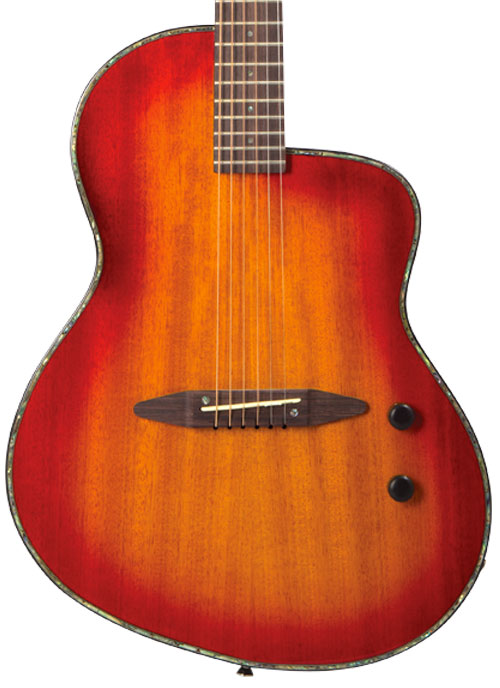
Buckingham’s. The Rick Turner N6 and S6 are both semi-hollow electrics that seamlessly blend acoustic qualities
into their sound. The main difference between them is the N6 sports nylon strings while the S6 has steel.
Both have Cedar tops with Okoume bodies and a bolt-on Mahogany neck, creating something that truly stands out
against the general semi-hollowbody market.
one-of-a-kind designs are finally available to those of us with pockets that may not be as deep as Lindsay
Buckingham’s. The Rick Turner N6 and S6 are both semi-hollow electrics that seamlessly blend acoustic qualities
into their sound. The main difference between them is the N6 sports nylon strings while the S6 has steel.
Both have Cedar tops with Okoume bodies and a bolt-on Mahogany neck, creating something that truly stands out
against the general semi-hollowbody market.
For something with a somewhat similar MO but its own particular style, take a look at the MK Hybrid guitars. These models would be in the same class as some of the Taylor semi-hollowbodies or perhaps something from Godin. Two models are available: the Hybrid and the Hybrid Special, the latter of which comes with a beautiful spalted Maple top. Both models include the same combination of a humbucker pair and an acoustic transducer at the bridge.
Michael Kelly is offering some of the most uncommon and individualistic guitars out there, building them at a rate unparalleled by boutique builders. Because Michael Kelly truly believe that everyone should be able to afford a special guitar that they can be proud to own, they want to put each of their guitars within reach of all players. And if you can’t find something that makes you go, “Huh? I didn’t know they made that,” then you haven’t dug deep enough in their catalogue. The more you look at this company and what they have to offer, the more impressive it gets. With a little something special for every player, Michael Kelly certainly puts the boutique within reach.
Michael Kelly Official