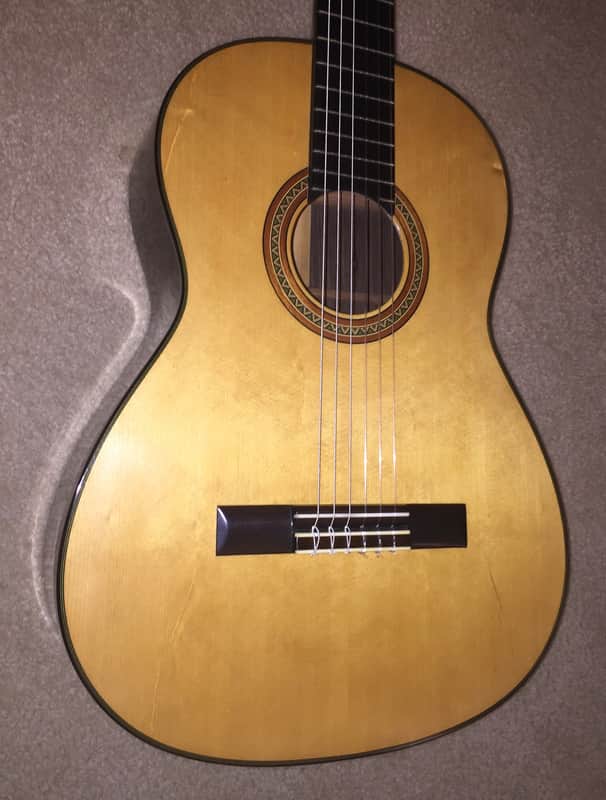

Anthony Gaillard Murray Concert Classical Guitar, 1999, with Klaus Scheller tuners, in Hiscox case
New Price€3,155.16
+ €157.76 Shipping
This listing has ended
See similar gear from other Reverb sellers
Listed:6 years ago
Views:141
Watchers:6
Offers:0
Shepherdstown, WV, United States
Our users rate Reverb
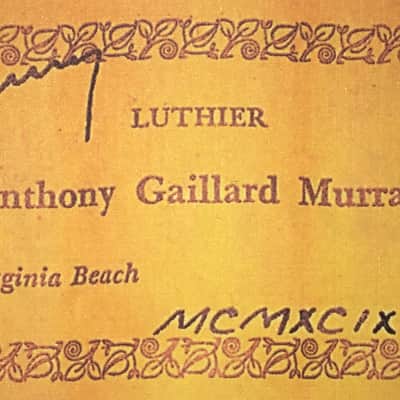
Anthony Gaillard Murray (1941-2005) was born in Klamath Falls, Oregon, and graduated from Oakland High School, California, in 1958. After having studied Industrial Arts at San Francisco State College, 1958-1962, he opened a guitarmaking shop at 1022 Bush Street, in the Nob Hill neighborhood of San Francisco, in 1965, where he made classical and flamenco guitars, and lutes. He was among the first generation of American-born luthiers to build concert Spanish-style guitars in the United States. Murray was an accomplished flamenco guitarist, having studied with Adonis Puertas in San Francisco in the 60’s. His playing informed his guitarmaking.
Murray moved to Virginia Beach, Virginia, in 1975, and shortly thereafter moved into a c.1890 farmhouse in Pungo, Virginia. In 1987 the duck decoy carver Frank Finney moved into the house next door, and taught Murray to carve. The humidity was so high in the summers in Pungo that Tony couldn’t make guitars, so he made about a dozen or so duck decoys a year and three guitars per winter. Murray’s duck decoys have a cult following among collectors.
Murray died suddenly in 2005, at the age of 64, and his guitars are now cherished by those who know them. They sound extraordinary.
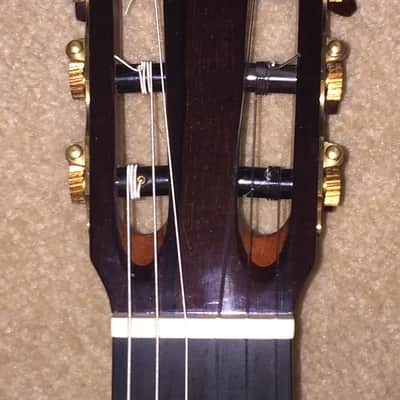
This instrument, from 1999, is one of the latest know guitars that Tony built, at the age of 58. It is distinguished by an elegantly and subtly re-designed headstock, and Bouchet-like open-bar bracing of a very thin top. I have owned numerous Murray guitars over the years and this example has stayed with me as being the finest example of his work that I have ever played. It has a sweet, old-world charm in the tradition of Manual Ramirez and Santos Hernandez, and has a standard 650mm scale length.
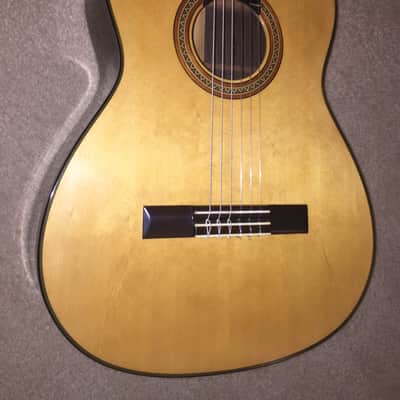
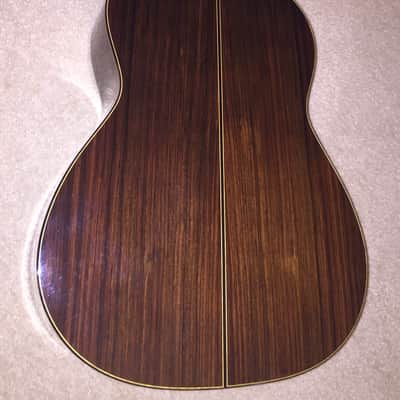
The top is master grade German Spruce with bookmarked Bearclaw marks in the upper bout, and streaks emanating from below the bridge on the lower bout. The top has considerable medullary rays (cross-grain silking). The back and sides are fine East Indian Rosewood.
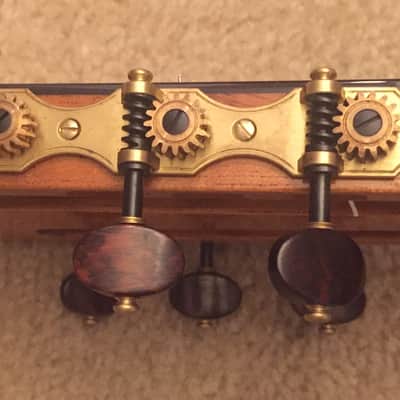
I upgraded the original tuners to a German set by Klaus Scheller, which I believe to be superior to Rodgers, Alessi, and others. They are as smooth as silk, and quite handsome, with Snakewood buttons.
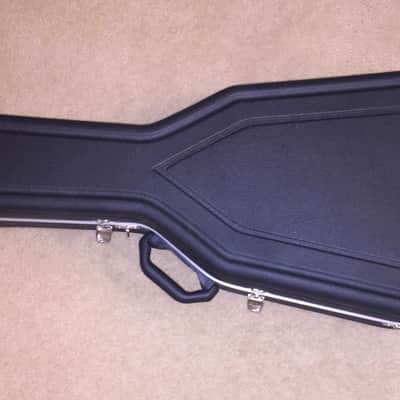
Finally, the guitar ships in a new Hiscox case.
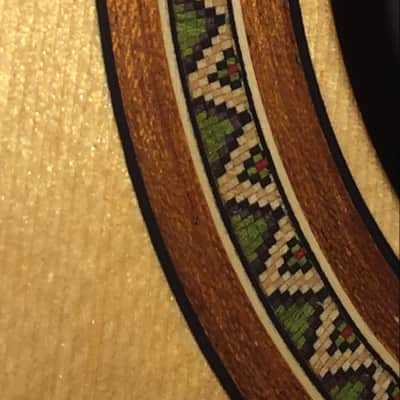
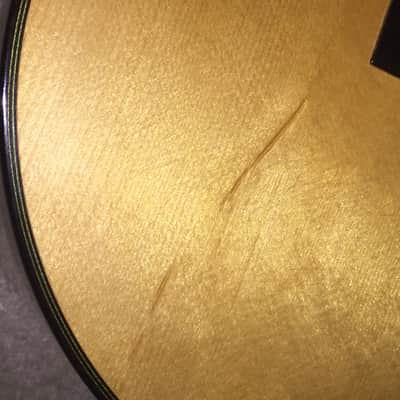
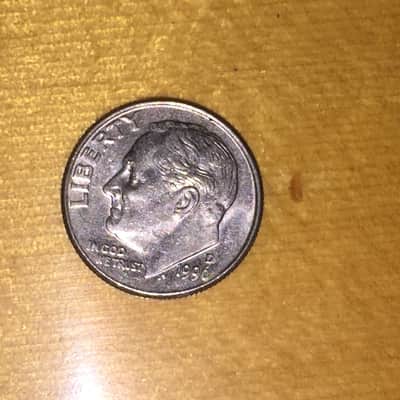
This guitar is in pristine condition except for one tiny pinhead ding to the top (pictured) and a few tiny lines of finish crazing by the tuners (also visible in the picture if you look closely). The guitar and case have always been properly humidified, and kept in a smoke-free home.
Just last month I had Luis Fernández de Córdoba, an expert luthier in Alexandria, Virginia, dress the frets and perform a fresh setup. Thus the ease of playability is superb. He also commented on her excellent sound!
“Anthony Murray was repulsed by the contemporary ‘concert’ classical guitar and had a totally different philosophy about the guitar… He rejected the ultra-high actions and ultra-high tension string approach of modern ‘concert’ classical guitars, because he (practically and realistically) viewed the guitar as a chamber music instrument meant for salons and other intimate venues where the few attentive listeners are quiet. Playing a classical guitar in a concert hall is an exercise in futility, and making a guitar with that in mind ruins the sweetness of tone. As a result, his guitars are easier and more fun to play, and they have a compellingly gorgeous tone. But they are not overly loud… Years ago Tony went to a luthier's convention of some sort. When he came back he visited me on his way home. I asked him if he'd seen anything interesting at the convention. He shook his head in the negative. “Just a lot of loud guitars.” He was a man of few words, and I loved the guy. He didn't make many guitars in his last few years, which is a shame.” —George Pepper, Guitarist, San Antonio, TX
“Tony Murray was a beautiful guy. I loved to talk about guitars with him. I miss him. The lute he built me was gorgeous, with a clear, warm sound.” —Michael Lorimer, Guitarist (former student of Andres Segovia), New York City
While I fully intended for this guitar to be a lifetime keeper, we have promised to pay our son’s rent in 2021 while he works on his PhD. Thus my ‘keeper’ is an instrument made for me by a friend of mine for my 50th birthday, a decade ago.
Cheers,
David
Murray died suddenly in 2005, at the age of 64, and his guitars are now cherished by those who know them. They sound extraordinary.
This instrument, from 1999, is one of the latest know guitars that Tony built, at the age of 58. It is distinguished by an elegantly and subtly re-designed headstock, and Bouchet-like open-bar bracing of a very thin top. I have owned numerous Murray guitars over the years and this example has stayed with me as being the finest example of his work that I have ever played. It has a sweet, old-world charm in the tradition of Manual Ramirez and Santos Hernandez, and has a standard 650mm scale length.
The top is master grade German Spruce with bookmarked Bearclaw marks in the upper bout, and streaks emanating from below the bridge on the lower bout. The top has considerable medullary rays (cross-grain silking). The back and sides are fine East Indian Rosewood.
I upgraded the original tuners to a German set by Klaus Scheller, which I believe to be superior to Rodgers, Alessi, and others. They are as smooth as silk, and quite handsome, with Snakewood buttons.
Finally, the guitar ships in a new Hiscox case.
This guitar is in pristine condition except for one tiny pinhead ding to the top (pictured) and a few tiny lines of finish crazing by the tuners (also visible in the picture if you look closely). The guitar and case have always been properly humidified, and kept in a smoke-free home.
Just last month I had Luis Fernández de Córdoba, an expert luthier in Alexandria, Virginia, dress the frets and perform a fresh setup. Thus the ease of playability is superb. He also commented on her excellent sound!
“Anthony Murray was repulsed by the contemporary ‘concert’ classical guitar and had a totally different philosophy about the guitar… He rejected the ultra-high actions and ultra-high tension string approach of modern ‘concert’ classical guitars, because he (practically and realistically) viewed the guitar as a chamber music instrument meant for salons and other intimate venues where the few attentive listeners are quiet. Playing a classical guitar in a concert hall is an exercise in futility, and making a guitar with that in mind ruins the sweetness of tone. As a result, his guitars are easier and more fun to play, and they have a compellingly gorgeous tone. But they are not overly loud… Years ago Tony went to a luthier's convention of some sort. When he came back he visited me on his way home. I asked him if he'd seen anything interesting at the convention. He shook his head in the negative. “Just a lot of loud guitars.” He was a man of few words, and I loved the guy. He didn't make many guitars in his last few years, which is a shame.” —George Pepper, Guitarist, San Antonio, TX
“Tony Murray was a beautiful guy. I loved to talk about guitars with him. I miss him. The lute he built me was gorgeous, with a clear, warm sound.” —Michael Lorimer, Guitarist (former student of Andres Segovia), New York City
While I fully intended for this guitar to be a lifetime keeper, we have promised to pay our son’s rent in 2021 while he works on his PhD. Thus my ‘keeper’ is an instrument made for me by a friend of mine for my 50th birthday, a decade ago.
Cheers,
David
This item is sold As-Described
This item is sold As-Described and cannot be returned unless it arrives in a condition different from how it was described or photographed. Items must be returned in original, as-shipped condition with all original packaging.Learn More.
| Listed | 6 years ago |
|---|---|
| Condition | Excellent (Used) Excellent items are almost entirely free from blemishes and other visual defects and have been played or used with the utmost care.Learn more |
| Brand |
|
| Model |
|
| Categories | |
| Year |
|
| Made In |
|
| Body Shape |
|
Product safety information may be available here.