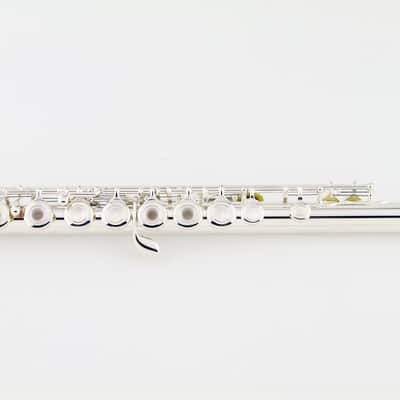
*Certified Pre-Owned* Yamaha Intermediate Flute - YFL-481H
This listing has ended
See similar gear from other Reverb sellers

Our users rate Reverb
Our Certified Pre-Owned band instruments are used, but their condition is indistinguishable from new! Don‰Ûªt miss this great opportunity to save hundreds off the cost of a brand new Yamaha flute! We guarantee the flawless condition of every used instrument we sell.åÊåÊ
All Certified Pre-Owned Yamaha band instruments come with a 5-year Hyson Music Warranty!
Are you in the market for the perfect intermediate flute?
The Yamaha YFL-481H has everything you could ask for in a step-up instrument!
Yamaha‰Ûªs intermediate flutes are designed using much of the same technology and material as their professional flute models. The 400 series of Yamaha flutes are strikingly similar in craftsmanship and construction. The YFL-481H flute is a favorite among music educators and intermediate student musicians alike. Renowned for its quick response and brilliant sound, the Yamaha Flute YFL-481H is an excellent choice for an intermediate level flute player!
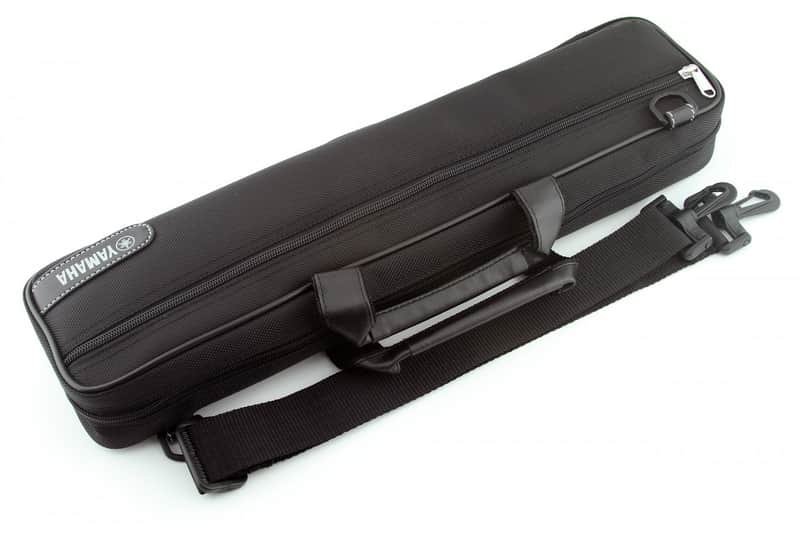
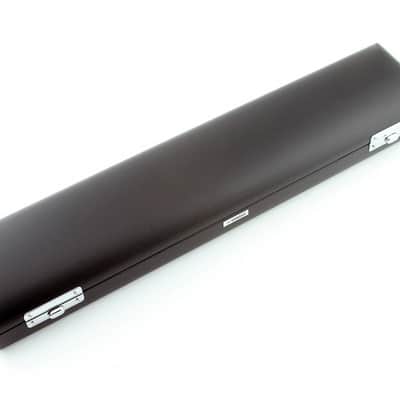
Included Accessories: plastic case, durable zippered case cover with handles and shoulder strap, cleaning rod, owner‰Ûªs manual, and polishing cloth
This flute is also with an offset G key configuration:
Product Details
Level: Intermediate
An intermediate flute is a step up from a standard entry-level student flute. Yamaha has a 300 and a 400 series of intermediate flutes. The 400 series flute models have features that are more closely aligned with professional Yamaha flute models, although both 300 and 400 series Yamaha flutes share many features with the professional lines.
[Back to top]
Key: C
The flute is a non-transposing instrument. Non-transposing instruments are those which are notated in the same key on paper that they sound when they are performed.
[Back to top]
Body Material: Sterling silver
The YFL-481H has a stunning sterling silver body, aiding with enhanced sound projection and the production of a rich, warm tone. Sterling silver can be polished to maintain its shiny appearance. Keep in mind that silver does tarnish, and therefore maintenance with a silver polishing cloth is important. Even tarnished silver can be made to look very nice with proper polishing. Do not use liquid silver polish, as it can interfere with the mechanisms of the flute. The sterling silver material used for the YFL-481H‰Ûªs body is one of the key features that set this flute apart from many other intermediate models, including Yamaha‰Ûªs 300-series of intermediate flutes.
[Back to top]
Headjoint: CY cut; Sterling silver
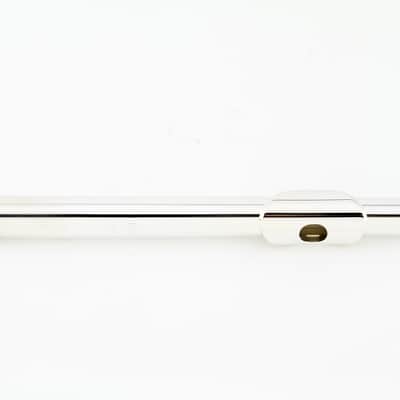
CY refers to the cut and taper of the headjoint, factors that impact a flute‰Ûªs playability in terms of affects, attack, response, timbre, tonal depth, and resistance. Yamaha‰Ûªs C Cut has a large undercut to promote smooth breath flow and ideal breath speed, aiding in a strong sound presence as well as a solid low range. The Y Taper, Yamaha‰Ûªs original French-style 2-stage taper, provides for excellent midrange and high-note projection, a warm timbre, and easy tonal control. Yamaha produces headjoints in a variety of cuts and tapers; the components of the YFL-481H‰Ûªs CY style are considered ideally suited for developing intermediate level players. The YFL-481H has a 92.5% pure sterling silver headjoint, much like many professional flute headjoints.
[Back to top]
Key Material: Silver plated nickel
Yamaha prides itself on using only top quality, durable materials for their keys. This dedication to high standards gives the YFL-481H durable keys that are less susceptible to breakage. Some companies have been criticized for cutting corners by using softer metals for their keys, but in the end this can lead to bending and less precise mechanisms. Use of durable metal in key construction helps to prevent leaks, intonation issues, frequent repairs, and endless frustration. Key posts have been thickened and redesigned for improved durability and strength to maintain accurate rod alignment. All key shapes and placements have been ergonomically designed for comfortable, natural-feeling performance. The keys are hand-assembled and adjusted for a perfect 'touch' and balance. Double bladder pads allow for a longer life and maximum seating, reducing the need for frequent pad replacements as compared to flutes with single bladder pads.
[Back to top]
Footjoint: B with gizmo key
The YFL-481H has a B footjoint. There are two main types of flute footjoints: C and B. The C footjoint has the Eb key, the C# key, and the C key. C footjoints are common on student flutes. The B footjoint, used for many intermediate and just about all professional flutes, has an extra key on the end that extends the flute‰Ûªs range down by a half step; a B foot aids with sound production in the lower register and intonation in the third register. A unique footjoint alignment mark facilitates proper fitting by young players. A gizmo key closes the low B tone hole without closing the low C or C# hole, facilitating performance of a fourth octave C and making for convenient fingering for high C.
[Back to top]
Tone Holes: Drawn
Flute tone holes are either drawn or soldered. The standard for student and many intermediate flutes is for the tone holes to be drawn, meaning that they are literally extracted from the metal tubing during the manufacturing process. When this method is used, no extra weight is added to the flute. When the tone holes are soldered on, additional metal is being used, as the tone hole rings are created from a separate piece of metal, and therefore the instrument will be slightly heavier. Generally, soldered tone holed instruments will be slightly more expensive because of the additional material and time needed to use this method. However, it should be noted that the additional cost associated with soldered versus drawn tone holes does not necessarily mean that the instrument‰Ûªs sound quality or playability is improved. It is really a matter of preference for some professional players to use soldered tone holes; there are numerous professional model flutes that have drawn tone holes. A flute with drawn tone holes has a lighter feel and creates a lighter sound as compared to a flute with soldered tone holes, whose extra weight gives the flute a darker sound and a feeling of more resistance.
[Back to top]
Key System: Inline G
The YFL-481H has an inline G key system. An offset G key means that the G keys are slightly offset from the rest of the keys and are mounted on separate posts. This contrasts with an inline G key, wherein the G keys are in a straight line with the rest of the flute‰Ûªs keys. The offset G key can be advantageous, particularly for younger players, because it can accommodate smaller hands and tends to encourage a more comfortable hand position. Acoustically, there is not a difference between an inline G key and an offset G key. Inline G key systems may be more advantageous for players with particularly long fingers, although it can also just be a matter of personal preference.
[Back to top]
Key Types: Ring keys (open hole)
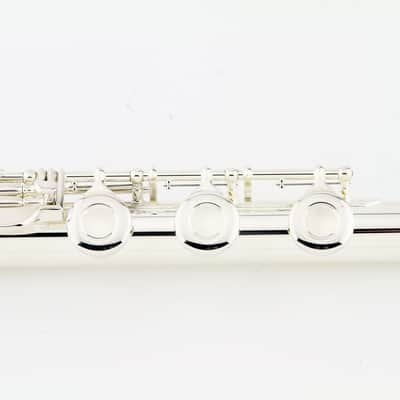
The YFL-481H has ring keys, also known as French keys, meaning that the flute has venting holes at the center of its keys. The alternative is a closed-hole key type (also known as plateau keys), which is generally discouraged beyond the entry level. If you are purchasing the YFL-481H for a young student, it may be helpful to utilize a product to close the holes, such as key plugs (included) or ring key patches, but generally intermediate players are ready and should be encouraged to use a flute with open holes.
[Back to top]
Spring Type: Stainless steel
Needle stainless steel springs are durable, they have strong holding power, and they do not rust. Stainless steel is a very most common material used for flute springs. The spring helps to open and close each key over the corresponding tone hole. This is an important job for a small pin; if the springs are too tight, the key will require too much pressure to close; and if the springs are too loose, keys will be slow to rise back up after being pressed.
[Back to top]
Screw Type: Tapered pivot with nylon inserts
The YFL-481H‰Ûªs tapered pivot screw types are another feature that differentiate this model from standard student flutes as well as some intermediate flutes. Like many professional model flutes, the YFL-481H uses headed cylindrical pivot screws (also known as tapered pivot screws), which are generally agreed upon to be the best types because they have the most precise fit and durability. Yamaha's unique screw resistance inserts allow smooth adjustments while preventing gradual loosening of the screws.
[Back to top]
Bumper Type: Cork
Flute bumpers are put onto the underside of keys that aren‰Ûªt directly above a tone hole (such as the Eb pinky key on the foot joint). The purpose of a bumper is to prevent bending, scratching, and excess noise. They are generally made of cork or neoprene. The YFL-481H has cork bumpers, whereas flutes in Yamaha‰Ûªs 300 series have neoprene bumpers. While cork is more traditional, neoprene is more durable, in part because by nature cork is more easily subject to compression that neoprene. However, advancing and professional players often prefer flutes with cork bumpers because mechanical noise is less with cork than rubber bumpers; this makes sense considering that neoprene is harder than cork. Cork bumper also have a lighter feel.
[Back to top]
| Listed | 10 years ago |
|---|---|
| Condition | Very Good (Used) Very Good items may show a few slight marks or scratches but are fully functional and in overall great shape.Learn more |
| Brand | |
| Model |
|
Product safety information may be available here.