
Roland GM-70 guitarsynth MIDI CONVERTER MODULE (110 volt, comes from the USA) 19” rack / synthguitar
This gear has sold
See similar gear from other Reverb sellers
Listed:7 years ago
Views:726
Saves:12
Offers:0

TILBURG, Netherlands
Our users rate Reverb
FOR SALE
Roland GM-70 Pitch-to-MIDI Converter
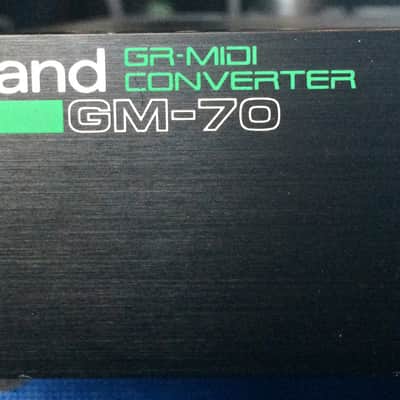
VINTAGE ROLAND GM-70 GR TO MIDI CONVERTER GM70 FOR GUITAR SYNTH
Very rare piece of equipment from the 1980s that lets you turn any Roland GR guitar into a synthesizer and drive dedicated synth units instead of guitar focussed ones
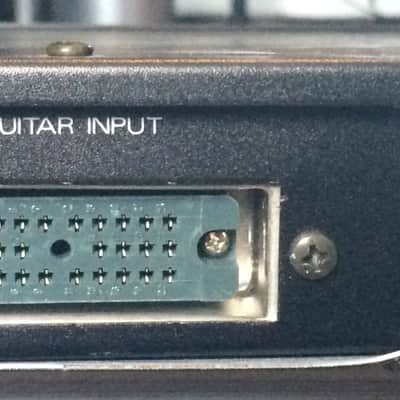
Fits nicely with all other Roland 24-pins synth guitar stuff.
Also with all 13-pins, unless you have a 24 to 13 pin converter like the Roland BC-13 (see my other add).
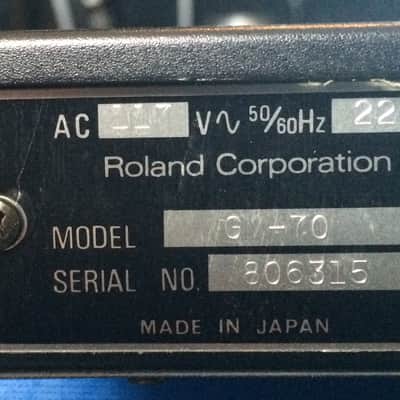
**NOTE: This unit is rare in Europa so I bought it in the USA. Therefor a different voltage. Europeans need a 220 to 110 volt converter which is simple to get and not that expensive.**
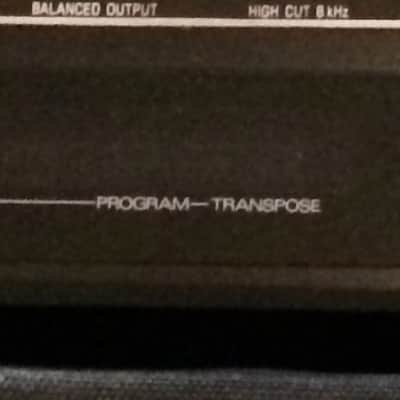
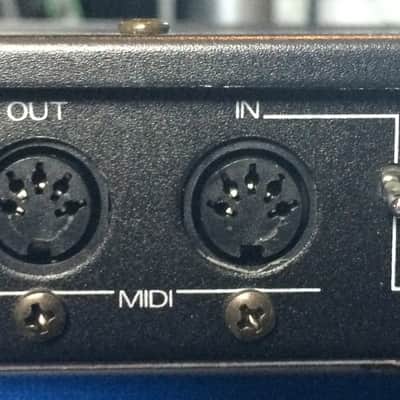
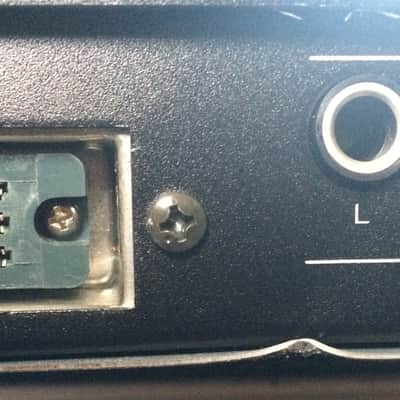
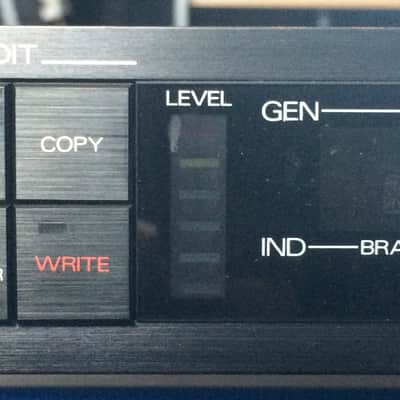
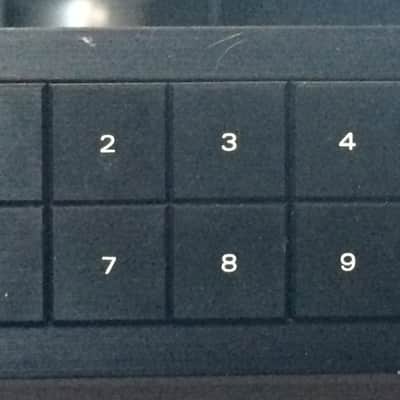
The pics are part of the description and shows the condition of the unit as well. Unit has some scratches and a little dent. In rackposition hardly visible.
Find more info about this unit on the WWW.
Price: 200 euro ex 8,50 shipping (Holland) / 25 euro (Europe) / 40 (USA and beyond).
Pickup in Tilburg/The Netherlands close to station Tilburg Reeshof, also possible.
Features and Specifications:
128 Patches, each with four "Branches" (A to D)
Two editing methods to create a branch: General Edit and Individual Edit.
Supports assignable MIDI control numbers from 0 to 95, MIDI Poly and Mono Modes
CV #3 (Whammy Bar) supports "Absolute" or "Center" modes of operation
Up to 4 continuous controllers from guitar, plus 3 position mode switch
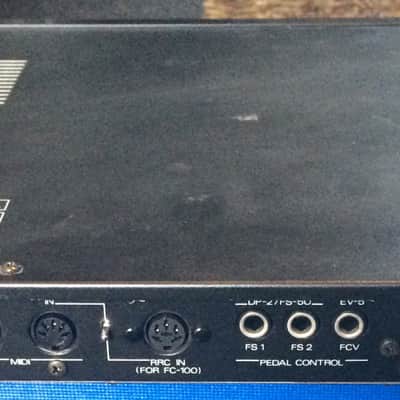
2 - Assignable foot switches (Roland FS-5L, FS-5U or similar, not included)
1 - Assignable foot pedal (Roland EV-5, not included)
Guitar volume control simultaneously transmits MIDI volume (controller 7)
Stereo input for one synthesizer
Optional use of Roland FC-100 foot pedal (not included) controller to change patches, plus adds one more MIDI switch and controller
Dimensions: 482 mm (W) 276 mm (H) 44 mm (D)
Power Requirements: 22 watts
Weight: 4.0 kg 8 lb. 13 oz.
Response Time: 45.64 ms
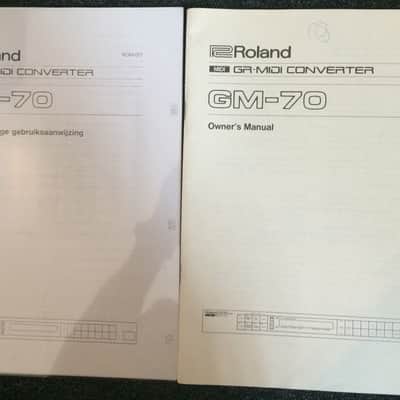
Roland GM-70 manual (included)
The Roland GM-70 was the first stand alone Guitar-to-MIDI converter built by Roland. Many longtime GM-70 users insist that the GM-70 is still the best guitar-to-MIDI converter ever built.
Like other modules produced by Roland during this time, the GM-70 sports a smart fluorescent blue display, calling to mind high-end Lexicon units of the same period. The GM-70 is flexible and easy to use as well. This much can be said about the GM-70: no other Guitar-to-MIDI converter ever built offers as many features as the GM-70, yet no other converter is quite as slow as the GM-70.
With the GM-70 you can control up to eleven possible MIDI parameters! That is four destinations for the four continuous controllers on the guitar, plus two possible destinations for the mode switch. In addition, the GM-70 has inputs for two more foot switches plus a Roland EV-5 foot pedal input. Then plug in the optional Roland FC-100, and you add an additional foot switch and EV-5 pedal input, for a total of eleven! The Roland GM-70: it goes up to "11."
works with a Roland GK-1 Driver.
CV #3, the MIDI whammy bar found only on the Ibanez IMG2010, can be used "center" mode or "absolute" mode. In "center" mode, the whammy bar transmits values of 64 to 0 as the bar is pushed down, and values of 64 to 128 as the bar is pulled up. In "absolute" mode the whammy bar transmits values of 0 to 128, whether the bar is pushed down or pulled up. It still amazes me that the Roland GM-70 has such excellent support for the MIDI whammy bar found on the IMG-2010, but Roland never built its own guitar with a MIDI whammy bar.
One final observation: when carefully calibrating my rig, I noticed that both the GM-70 and MC1 have a pretty coarse control resolution. Rather than seeing numbers smoothly scroll from 0 to 64, or 0 to 128, I would only see even numbers. I would have to say this indicates a lack of resolution in the GM-70 and MC-1 circuitry.
ALSO:
- The Roland GM-70 GR To MIDI Converter was introduced to the guitar market in 1987. The GM-70 was one of the most significant technological leap found in any of the seven generations of Roland Guitar Synthesizer products. This was the first product to really give the guitar player the power and ability to use MIDI as a tool of expression. Even now, the GM-70 is still a very usable machine years after its introduction.
- Let's look at why this unit is so innovative. The GM-70 was the first Roland
guitar converter that did not have any sounds of it's own. Instead, it is
designed to function as a guitar to MIDI converter that can efficiently
transmit MIDI data to other MIDI devices. The GM-70 can also be used to control the slew of rack mounted MIDI guitar effects processors that have saturated the market in the last five years. The GM-70 works with the GK-1 which was the
first hex pickup that could be mounted directly on a standard guitar. It also
works well with any G series guitar.
- The MIDI Out of the GM-70 is fast and accurate. There are 128 total patch
configurations which are programmed to transmit a significant collection of
MIDI messages. Each patch is broken down into four individual "Branches." A
branch includes a significant collection of MIDI parameters. For openers, each branch can be assigned to any MIDI channel and it can be set in Poly mode: all six strings on one MIDI channel, or Mono mode: each string on its own separate MIDI channel. Mono mode tracks much better than Poly mode because each string has its own independent bend messages that are transmitted to the responding synthesizers. Each of the four branches can also have it's bend range set + or
- 36 half steps which allows maximum flexibility with a collection of
responding synthesizers. Each of the four branches can also have a separate
velocity curve set to it and it can transmit a MIDI volume message to the
synthesizer that it is assigned to. Within the individual string edits per
branch, each string can be turned on or off, have an individual transposition
set to it and, individual program change messages can be sent out per string, per MIDI channel. Remember all of these edit parameters are available for each branch. There are four branches in every patch and there are 128 patches in the GM-70.
- The final innovative MIDI controller function that is featured in the GM-70
is the ability to transmit any MIDI continuous controller message from a huge
collection of controller knobs, switches and foot pedals. No less than eleven
different controllers can be assigned to any type of MIDI controller message
including: pressure, bend, modulation, volume, pan, hold, sostenuto. octave up
etc.. The GM-70 was also the first GR product that worked with the FC-100 Foot Control Pedal. The FC-100 uses it's own type of cable connector that transmits program change messages from numbered foot pedals. It also transmits controller messages from a controller pedal and an optional expression volume pedal. The
FC-100 is even phantom powered by the GM-70, so it does not need batteries or a power supply.
Roland GM-70 Pitch-to-MIDI Converter
VINTAGE ROLAND GM-70 GR TO MIDI CONVERTER GM70 FOR GUITAR SYNTH
Very rare piece of equipment from the 1980s that lets you turn any Roland GR guitar into a synthesizer and drive dedicated synth units instead of guitar focussed ones
Fits nicely with all other Roland 24-pins synth guitar stuff.
Also with all 13-pins, unless you have a 24 to 13 pin converter like the Roland BC-13 (see my other add).
**NOTE: This unit is rare in Europa so I bought it in the USA. Therefor a different voltage. Europeans need a 220 to 110 volt converter which is simple to get and not that expensive.**
The pics are part of the description and shows the condition of the unit as well. Unit has some scratches and a little dent. In rackposition hardly visible.
Find more info about this unit on the WWW.
Price: 200 euro ex 8,50 shipping (Holland) / 25 euro (Europe) / 40 (USA and beyond).
Pickup in Tilburg/The Netherlands close to station Tilburg Reeshof, also possible.
Features and Specifications:
128 Patches, each with four "Branches" (A to D)
Two editing methods to create a branch: General Edit and Individual Edit.
Supports assignable MIDI control numbers from 0 to 95, MIDI Poly and Mono Modes
CV #3 (Whammy Bar) supports "Absolute" or "Center" modes of operation
Up to 4 continuous controllers from guitar, plus 3 position mode switch
2 - Assignable foot switches (Roland FS-5L, FS-5U or similar, not included)
1 - Assignable foot pedal (Roland EV-5, not included)
Guitar volume control simultaneously transmits MIDI volume (controller 7)
Stereo input for one synthesizer
Optional use of Roland FC-100 foot pedal (not included) controller to change patches, plus adds one more MIDI switch and controller
Dimensions: 482 mm (W) 276 mm (H) 44 mm (D)
Power Requirements: 22 watts
Weight: 4.0 kg 8 lb. 13 oz.
Response Time: 45.64 ms
Roland GM-70 manual (included)
The Roland GM-70 was the first stand alone Guitar-to-MIDI converter built by Roland. Many longtime GM-70 users insist that the GM-70 is still the best guitar-to-MIDI converter ever built.
Like other modules produced by Roland during this time, the GM-70 sports a smart fluorescent blue display, calling to mind high-end Lexicon units of the same period. The GM-70 is flexible and easy to use as well. This much can be said about the GM-70: no other Guitar-to-MIDI converter ever built offers as many features as the GM-70, yet no other converter is quite as slow as the GM-70.
With the GM-70 you can control up to eleven possible MIDI parameters! That is four destinations for the four continuous controllers on the guitar, plus two possible destinations for the mode switch. In addition, the GM-70 has inputs for two more foot switches plus a Roland EV-5 foot pedal input. Then plug in the optional Roland FC-100, and you add an additional foot switch and EV-5 pedal input, for a total of eleven! The Roland GM-70: it goes up to "11."
works with a Roland GK-1 Driver.
CV #3, the MIDI whammy bar found only on the Ibanez IMG2010, can be used "center" mode or "absolute" mode. In "center" mode, the whammy bar transmits values of 64 to 0 as the bar is pushed down, and values of 64 to 128 as the bar is pulled up. In "absolute" mode the whammy bar transmits values of 0 to 128, whether the bar is pushed down or pulled up. It still amazes me that the Roland GM-70 has such excellent support for the MIDI whammy bar found on the IMG-2010, but Roland never built its own guitar with a MIDI whammy bar.
One final observation: when carefully calibrating my rig, I noticed that both the GM-70 and MC1 have a pretty coarse control resolution. Rather than seeing numbers smoothly scroll from 0 to 64, or 0 to 128, I would only see even numbers. I would have to say this indicates a lack of resolution in the GM-70 and MC-1 circuitry.
ALSO:
- The Roland GM-70 GR To MIDI Converter was introduced to the guitar market in 1987. The GM-70 was one of the most significant technological leap found in any of the seven generations of Roland Guitar Synthesizer products. This was the first product to really give the guitar player the power and ability to use MIDI as a tool of expression. Even now, the GM-70 is still a very usable machine years after its introduction.
- Let's look at why this unit is so innovative. The GM-70 was the first Roland
guitar converter that did not have any sounds of it's own. Instead, it is
designed to function as a guitar to MIDI converter that can efficiently
transmit MIDI data to other MIDI devices. The GM-70 can also be used to control the slew of rack mounted MIDI guitar effects processors that have saturated the market in the last five years. The GM-70 works with the GK-1 which was the
first hex pickup that could be mounted directly on a standard guitar. It also
works well with any G series guitar.
- The MIDI Out of the GM-70 is fast and accurate. There are 128 total patch
configurations which are programmed to transmit a significant collection of
MIDI messages. Each patch is broken down into four individual "Branches." A
branch includes a significant collection of MIDI parameters. For openers, each branch can be assigned to any MIDI channel and it can be set in Poly mode: all six strings on one MIDI channel, or Mono mode: each string on its own separate MIDI channel. Mono mode tracks much better than Poly mode because each string has its own independent bend messages that are transmitted to the responding synthesizers. Each of the four branches can also have it's bend range set + or
- 36 half steps which allows maximum flexibility with a collection of
responding synthesizers. Each of the four branches can also have a separate
velocity curve set to it and it can transmit a MIDI volume message to the
synthesizer that it is assigned to. Within the individual string edits per
branch, each string can be turned on or off, have an individual transposition
set to it and, individual program change messages can be sent out per string, per MIDI channel. Remember all of these edit parameters are available for each branch. There are four branches in every patch and there are 128 patches in the GM-70.
- The final innovative MIDI controller function that is featured in the GM-70
is the ability to transmit any MIDI continuous controller message from a huge
collection of controller knobs, switches and foot pedals. No less than eleven
different controllers can be assigned to any type of MIDI controller message
including: pressure, bend, modulation, volume, pan, hold, sostenuto. octave up
etc.. The GM-70 was also the first GR product that worked with the FC-100 Foot Control Pedal. The FC-100 uses it's own type of cable connector that transmits program change messages from numbered foot pedals. It also transmits controller messages from a controller pedal and an optional expression volume pedal. The
FC-100 is even phantom powered by the GM-70, so it does not need batteries or a power supply.
This item is sold As-Described
This item is sold As-Described and cannot be returned unless it arrives in a condition different from how it was described or photographed. Items must be returned in original, as-shipped condition with all original packaging.Learn More.
| Listed | 7 years ago |
|---|---|
| Condition | Very Good (Used) Very Good items may show a few slight marks or scratches but are fully functional and in overall great shape.Learn more |
| Brand | |
| Model |
|
| Categories | |
| Made In |
|
Product safety information may be available here.