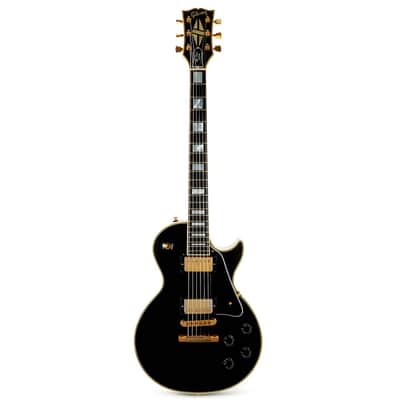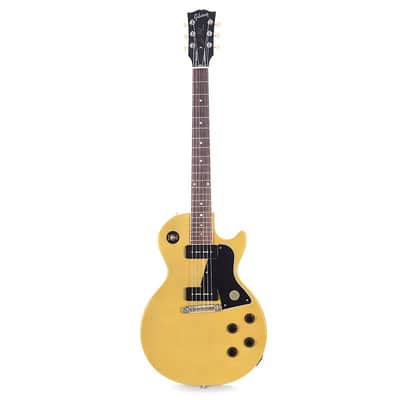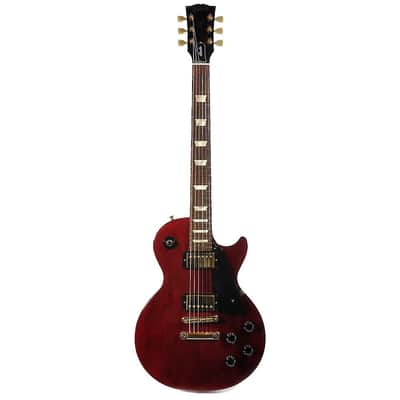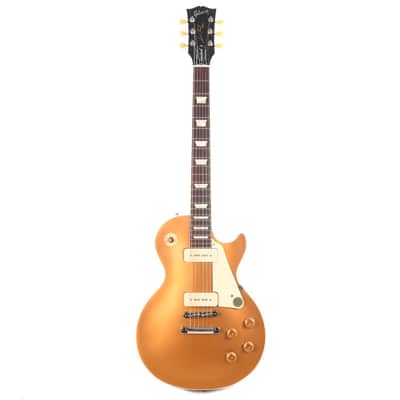
Multiple Finishes
Compare 127 from €1,708.30
If you say “electric guitar” to someone, there’s a good chance the first thing they’ll think of is a Gibson Les Paul. It’s an iconic instrument and it’s synonymous with rock ’n’ roll and all of its many sub-genres. From its early inception in 1952 up until the modern day, there have been many, many different variations of the Les Paul.
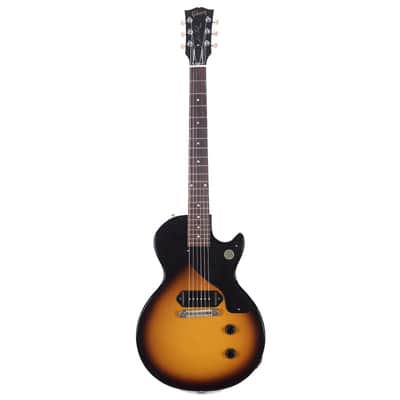
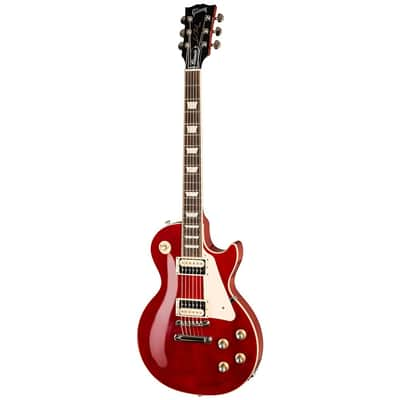
The Gibson Les Paul Standard is the singlecut guitar by which all others are judged. There are Les Paul models with more features than the Standard, and there are models with fewer features - two of which are the Les Paul Junior and the Les Paul Special.
The Gibson Les Paul Junior was introduced in 1954, and the Special a year later in 1955. They were originally brought in as student models - their stripped down, no-frills approach meant that they cost less, so they were more financially viable for those just starting out. They also tend to be lighter and thinner; again, ideal for students. The Les Paul Standard was brought in in 1958 and was more feature-laden than the Juniors and Specials, with its pair of newly designed humbuckers, bound mahogany body with maple cap and two-piece tune-o-matic bridge.
Over the years, all three models have been used by a huge range of players. Juniors and Specials were not exclusively used by students - punks and rockers such as Mick Jones, Johnny Thunders, Keith Richards and Billie Joe Armstrong took to the simple design and raw, bitey sound. They’ve also enjoyed a big resurgence in the last few years. Similarly, the Les Paul Standard, whilst being synonymous with blues and classic rock, is favoured by country players, metalheads and seemingly everyone else in between.
The Les Paul Standard has evolved so much since its debut in the late 50s. It’s been fitted with all sorts of different pickups; it’s had a weight relieved body, automatic tuners, different hardware, crazy finishes, coil-tap options and much more. The same can be said for Juniors and Specials - the P90s have been swapped for humbuckers, there have been double cut versions - there have even been many years where they weren’t produced at all.
In 2019, Gibson refreshed their entire range, swapping out models, bringing in old classics and generally, harking back to what players loved about Gibson. They created an Original and a Modern range. As you’d expect, the Original series is made up of models inspired by the ‘golden era’ of Gibson i.e. the 50s and 60s, whereas the Modern range continues to push forward and innovate.
The Les Paul Standard sits at the top of their Original range and is available as a '50s or '60s model, both with very traditional specs. The Les Paul Junior and Les Paul Specialsit underneath the Standard in the same Original series, and boast a very similar spec to what you’d have seen in the '50s. As you might expect, given that they’re more stripped back, Juniors and Specials tend to be cheaper than the Standard.
To make a comparison easier, we’ll be looking at the differences between the classic '50s/'60s-style versions of these guitars, as is available in the current Gibson Original range.
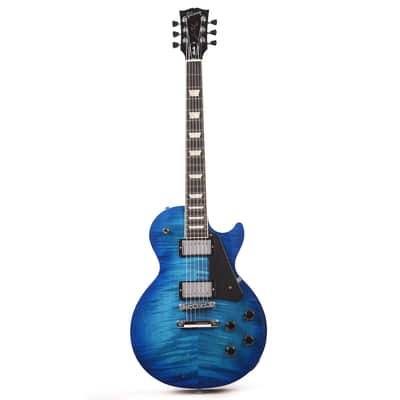
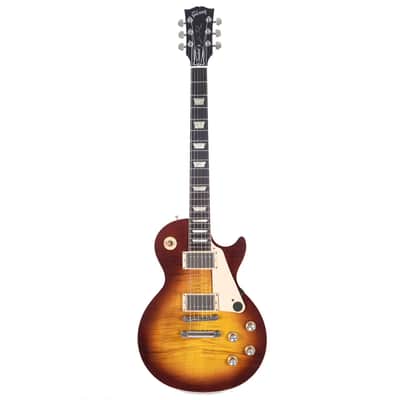
Whilst the general body shapes of the Les Paul Standard, Junior and Special are the same, there are quite a few differences beyond that. The Standard’s body is made primarily of mahogany, with a carved maple cap on top. The carved top means that if you look at the body side on, you’ll see that it’s a little thicker in the middle, and thinner at the sides. As a result, the guitars feel different to play.
Another point (albeit a heavily contested one) is that the maple cap lends a sonic property to the Standard. It tends to give a little more snap to the sound; a slightly brighter attack. It’s worth noting, however, that the Juniors and Specials are loaded with different pickups, so the difference in sound between these and the Standard should not be put down to the wood alone. The maple top also gives the Standards one of their most desirable aesthetic features—the figured top, which is the horizontal stripes that have helped characterize some of the most famous Les Pauls.
Les Paul Juniors and Specials have a slab mahogany body with no cap at all, making them a little bit thinner than a Standard. As such, Juniors and Specials tend to be lighter. They’ve also got flat tops, not carved. It’s worth noting that whilst the Les Paul Standard has been made as a double-cut, they’re harder to come by than the Juniors and Specials.
Double-cut versions of the Les Paul Junior and Special were introduced in 1958 and '59 respectively, and though they aren’t part of the Gibson Original range, they are much more common than the Standard. There are quite a few Custom Shop Doublecut Juniors and Specials, plus there’s a Doublecut Junior in the Gibson Modern range.
Quite a big difference between the Les Paul Standard and the "student"’ models of the mid-'50s is the pickups. One of the things that the Les Paul is so well known for is its big, beefy tone that comes courtesy of two humbucking pickups. The most well-known and sought-after Les Pauls are fitted with fairly medium output humbuckers—not too hot, but with enough punch to drive a tube amp nicely. The Les Paul Junior has a single dogear P-90 pickup, and the Les Paul Special has two soapbar P-90s. The difference between dogear and soapbar P-90s is largely aesthetic, the tonal difference is negligible.
P-90s are essentially big single-coil pickups. As a general statement, you can place them sonically somewhere between a Gibson humbucker and a Fender single coil. P-90s tend to be brighter and twangier than a humbucker, with more of a mid-range bark. Humbuckers have more low-end, and are generally warmer and punchier. P-90s and humbuckers are very different pickups, which is the main reason why Les Paul Standards sound so different to Les Paul Juniors and Les Paul Specials.
You might think that the Les Paul Junior, armed with its single P-90 pickup, means is less versatile, and some do argue that case. However, you can get a wide range of tones by using the tone knob to adjust the EQ and the volume knob to change how much output you’re sending to your amp. You might find that you play differently too, with only having one pickup to do everything with.
The Les Paul Special has two P-90s, so it’s capable of everything the Junior is, but you’ve got a neck pickup too, giving you an extra two pickup configurations (neck only, neck and bridge together).
Another key difference between the Standard and the Juniors and Specials lies within the hardware. The Les Paul Standard has a two-part bridge—a tailpiece and a tune-o-matic bridge. This contains six individual adjustable saddles; one for each string. By moving them slightly, you can adjust your guitar’s intonation i.e. how in tune it plays up and down the neck.
If you’re playing with keyboards, or alongside synthetic instruments, this can be really important as they’ll be playing perfectly in pitch—if you’re not, you’ll soon know about it (and so will the crowd!). As such, the Les Paul Standard can be perceived to have an advantage here, though you can always retrofit the Junior or Special with an adjustable wraparound.
Juniors and Specials come fitted with one-piece wraparound tailpieces. While this does mean you don’t have control over your intonation, many players like how the shorter string length feels on the fretting hand, claiming that it feels slinkier and that the strings are a little easier to bend. There’s even the argument to be made that wraparound tailpieces lend a touch more sustain too. It’s also one less thing on your guitar aesthetically; if you’re of the less-is-more mentality, then you’ll love the simplicity of the Junior and the Special.
Prolific palm-muters may also prefer a wraparound bridge as it’s smoother underhand; there are no jagged string saddles as you’re resting your palm on the strings by the bridge.
Whilst there are quite a few similarities between the Gibson Les Paul Standard and the Les Paul Junior and Special, they are very different guitars. The P-90 pickups fitted in the Juniors and Special yield a very different tone to the humbuckers in the Standard. Plus, if you put the Standard next to the Junior, you’ll clearly see the simple difference of two pickups vs one.
The body construction is also a key difference: The Juniors and Specials have a body made purely from mahogany, whereas the Standard has a mahogany body topped with a maple cap. You’ll also find a more advanced bridge system on the Les Paul Standard—the adjustable tune-o-matic—that helps keep your intonation in check, as opposed to the one-piece wraparound bridge system on the Junior and the Special.
It’s not a case of one is better than the other - they are different guitars and will suit different players with different needs. If you want the classic look and beefy sound that the Les Paul is known for, then Standard could be the one for you, though if you want something a little different, then take a look at a Junior or a Special. If you like the idea of combining features from both guitars then the Gibson Les Paul Standard 50s P-90 Goldtop has everything you’d see on a regular Standard except it’s got a pair of P-90s, instead of humbuckers.